
Writing workflow
Chapter outline: five decisions before drafting
Give the next chapter a purpose, a starting situation and a meaningful change. Build a flexible plan in Fyrlo, compare one option and review the draft.

A chapter outline can look complete and still leave you unsure what to write. Your plan says that the protagonist visits a neighbour, learns about the valley and prepares for an opening ceremony. Those events belong to the story, yet the chapter has no clear movement. Once you start drafting, conversation expands, description accumulates, and the important decision remains somewhere beyond the last paragraph. The problem is often a missing chapter job, rather than a shortage of ideas.
This guide uses five decisions to turn a vague chapter note into a workable writing brief. The invented example follows Inez, a trail planner trying to reopen a coastal walking route before a community event. You will establish a premise in Fyrlo, review its editable Book plan, connect the relevant characters, compare one focused alternative and draft only after choosing a direction. The same decisions can be recorded on paper. An app can hold planning context; it cannot decide whether the resulting chapter earns its place.
Establish the story before expanding the chapter
Start with the pressure that holds the book together. Inez wants the route ready for the event, but a damaged footbridge blocks the planned approach. She needs an alternative through an orchard whose keeper, Daniel, has good reasons to protect the fruit trees. Her larger difficulty is learning to ask for cooperation rather than promising a solution she cannot deliver alone. That premise gives the chapter a practical task and a relationship that can change.
In Fyrlo's Book workflow, the premise, genre, tone, length and characters feed an editable chapter plan. Read that plan before generating prose. Check whether the orchard visit contributes to the story you actually intend to tell. A plausible suggestion may introduce a rescue, a feud or a deadline that your premise never established. Treat those additions as proposals requiring a decision. Remove them if they would redirect the book merely to make one chapter busier.
Keep the working premise short enough to consult while revising a chapter summary. Add Inez and Daniel with the roles and relevant traits they need here: she coordinates the route; he cares for the orchard and fears damage from visitors. Their project context can support later generation, but it does not replace your judgment about motivation. The plot-and-character feature page explains the planning surface. Your first output should be a plan you understand, rather than a paragraph you hope will explain itself later.

1. Give the chapter outline one main job
Write one sentence naming what this chapter must accomplish. For the example: Inez obtains conditional access to the orchard and accepts responsibility for protecting it. This is more useful than a list of places she visits. It tells you which conversation matters, which description may support it, and what the reader should understand when the chapter ends.
The job can be emotional rather than practical. A character might recognize that an apology was self-serving, or discover that an apparently generous offer carries a condition. Do not force a confrontation into every chapter. What matters is that the passage changes the reader's understanding or the character's available choices. If nothing changes, ask whether the material belongs inside another chapter, needs a sharper purpose, or is intentionally providing a pause that the book genuinely needs.
Test the proposed job against the chapters around it. If Inez already secured permission in the previous chapter, another permission conversation probably repeats the same work. If this visit is meant to reveal Daniel's concerns, make that discovery specific enough to affect what comes next. Rewrite the summary in Fyrlo's plan before drafting. The setup-and-review sequence described on the process page makes this a natural point to choose direction, while the prose is still inexpensive to change.
2. Define the starting situation and viewpoint
Record what is true when the chapter opens. Inez knows that the bridge is closed and the event cannot use the original route. She believes Daniel will refuse any detour. Daniel knows what past visitors did to his trees, but has not heard her new proposal. These are different starting positions. A brief opening-state note prevents the draft from treating an unasked question as settled or inventing a shared conversation that never occurred.
Choose whose experience guides this chapter and why. Following Inez keeps the reader close to her mistaken assumption and lets Daniel's answer change it. Following Daniel would emphasize the cost of opening his land. Either could work, but they would make different chapters. A viewpoint is a way of presenting experience, not simply a name at the top of a planning note.
Also record the location, the necessary time relationship and the immediate intention. Inez arrives at the orchard gate after inspecting the bridge; she wants permission before recruiting volunteers for the detour. Include facts that constrain the action. When reviewing a suggested plan, check those facts against the manuscript. AI may supply a convenient meeting time or put a character at the gate without a believable reason to be there.
3. Decide what will be different at the end
Describe the ending situation separately from the final line. Daniel agrees to an escorted walk along the orchard boundary, provided Inez arranges volunteers to keep visitors away from the trees. She leaves with access and a new obligation. This is the planned change.
Compare entry and exit in plain language. At the start, the route is blocked and Inez expects refusal. At the end, an alternative exists, but she must share responsibility and organize help. Look for a changed decision, relationship, piece of usable knowledge or expectation. Avoid solving the entire novel just to prove that this chapter matters.
Keep a proposed ending distinct from a fact already written. The outline might currently promise agreement, while the eventual dialogue earns only a second meeting. That is not automatically a failure. If the second meeting creates a more credible next step, update the plan accordingly. A generated chapter must not be accepted merely because it arrives at the planned ending. The route to that ending needs to fit the characters and establish any condition that later chapters will rely on.
4. Arrange a short chain of necessary beats
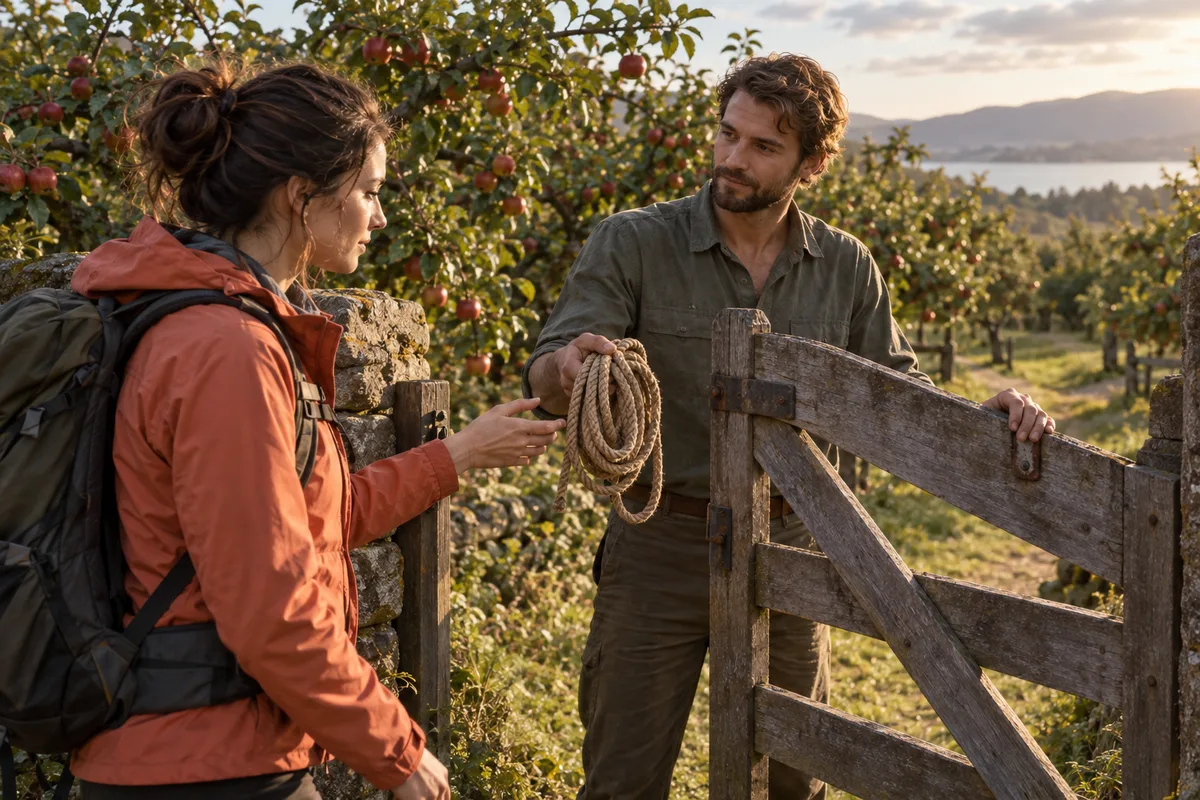
Now choose the actions that connect the two situations. Inez explains the bridge problem; Daniel describes the damage he fears; she listens instead of minimizing it; they examine the orchard boundary; she proposes an escorted route and accepts the volunteer requirement. Each action gives a reason for the next. This is a draftable chain, while “they discuss the orchard and become friends” leaves most of the chapter's work undefined.
Read the chain using because and therefore in your working notes. Because Daniel worries about the trees, Inez must offer a protective arrangement. Because the arrangement requires escorts, she needs to recruit help next. Their purpose here is to reveal a missing connection. If Daniel grants access before Inez addresses his concern, an extra description of the gate cannot repair the logic.
A chapter may contain one substantial scene or several shorter ones. Divide the beats only where a new situation benefits from its own treatment. Keep routine travel compressed unless something on the journey alters a choice. Resist assigning the same number of beats to every chapter: a delicate realization may need fewer events and more space within them. Start with enough detail to understand the change, then stop outlining when further notes merely repeat the draft you could already write.

5. Separate fixed choices from useful uncertainty
Mark what you have decided and what remains open. The chapter's job, Inez's viewpoint and Daniel's condition can be fixed for this draft. The exact exchange at the gate, the detail that makes Inez listen and the last sentence can remain discoverable. This distinction helps you avoid asking an app to fill every blank as if every plausible answer were an accepted story fact. An unresolved note is permission to investigate, not permission to contradict the premise.
Patricia C. Wrede describes planning outlines as adaptable working tools rather than a universal required format. Apply that flexibility to the amount of detail you keep. If you discover the chapter through writing, outline only the next meaningful choice and record what happened afterwards. If uncertainty repeatedly stalls you, define the missing constraint before drafting. The useful level is the one that makes the next writing session possible without draining its curiosity.
Set a boundary around the open question. For example, you may not yet know how Inez offers protection, but you know Daniel should not abandon his concern after one flattering sentence. Explore an arrangement that respects that limit. When new material changes the plan, revise the affected upcoming summaries. You do not need to rebuild the entire outline because one conversation became quieter; you do need to revisit later chapters if the promised orchard access no longer exists.

Compare one alternative, then draft and review
Before generating a chapter, compare two versions of one decision. Version A secures conditional permission at this visit. Version B ends with Daniel agreeing only to inspect the boundary together tomorrow. Write a short summary of each yourself, or use a focused continuation instruction to explore the unresolved choice where the workflow allows. Keep the premise, viewpoint and established facts stable.
Choose by consequence. Version A moves Inez toward recruiting escorts; version B gives the negotiation another stage and delays that task. Read the following chapter summary and ask which sequence supports it honestly. Then keep the accepted choice in the Book plan and discard incompatible assumptions from the draft. Fyrlo uses project planning, character and existing story context when continuing chapters, but that context does not guarantee perfect causality, consistency or a satisfying result.
Draft the next chapter, read it in full, and check the five decisions against what the prose actually establishes. Has Daniel's condition been earned? Does Inez's choice remain hers? Did the generation add a convenient authority, a sudden friendship or a solution that removes the next chapter's purpose? Edit before continuing. Fyrlo is free to download, while features or usage may require in-app purchases; consult the current offer in the app. Planning and generation cannot guarantee originality, factual accuracy or publication readiness. Continue from the version you have reviewed, with a clear record of its actual outcome.
Good to know
Questions and answers
How detailed should a chapter outline be?
Detailed enough to identify its purpose, starting situation, ending change and the actions connecting them. Leave language and smaller discoveries open if that helps you write. Expand a note when it hides a difficult decision; shorten it when it merely rehearses sentences you are ready to draft.
Do I need to outline every chapter before writing?
No. You can outline a few chapters ahead and update the remaining plan as you discover the story. Check consequences when a written chapter changes an assumption. A working outline should support the manuscript you are making, rather than preserve an earlier version at any cost.
Can Fyrlo check whether each chapter has a purpose?
The Book plan and story context can help you review the proposed direction, but do not assume an automatic assessment of chapter purpose. Read and evaluate each summary and draft yourself. Keep the decisions that serve your story, revise unsupported changes and review the result before continuing.