Writing decisions
Discovery writing with an AI partner
Keep accepted events clear while leaving the next discovery open. Judge whether a flexible Fyrlo plan supports the way you want to write.

Discovery writing becomes difficult when yesterday's exciting detour turns into today's unexplained contradiction. You want the next scene to surprise you, yet the book still needs to remember what its people have done. An AI partner can offer possibilities quickly, but it can also make an unwanted possibility sound settled. The useful decision is whether its planning and drafting workflow leaves you room to discover while keeping accepted events intelligible.
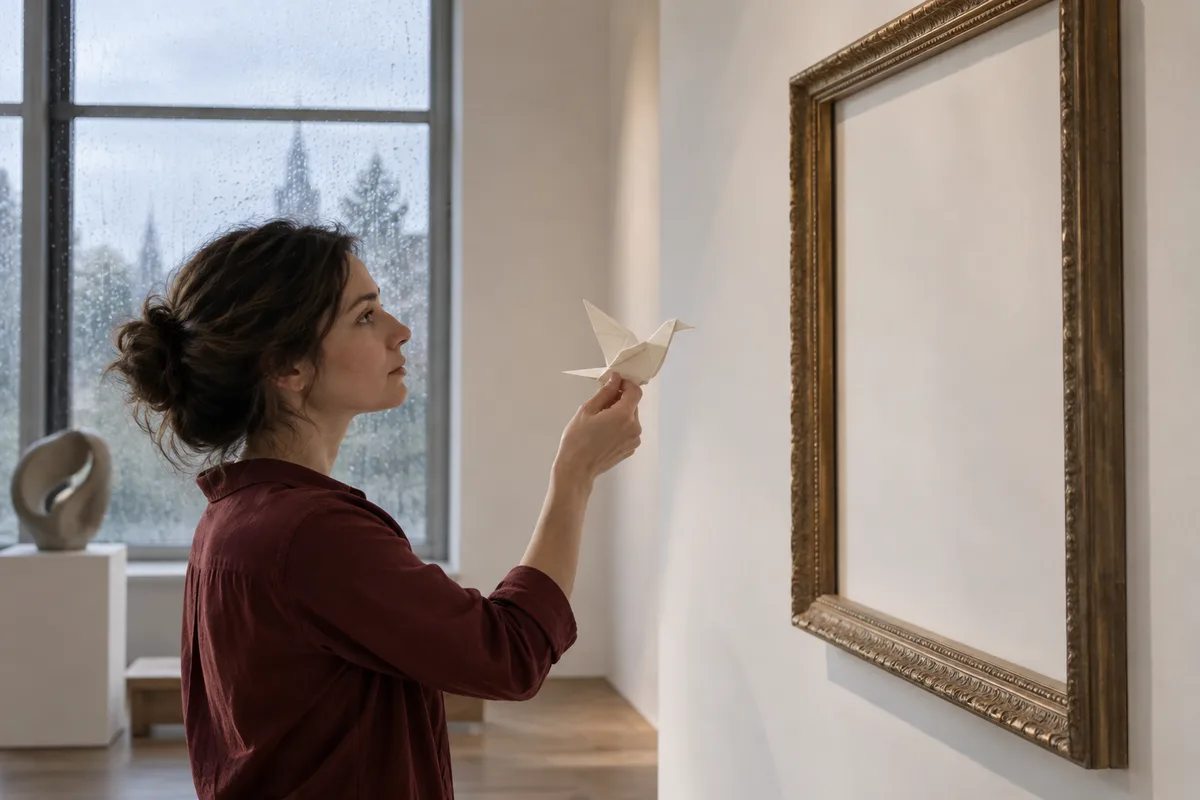
This guide uses an invented example: Lea, an adult exhibition designer, is preparing a suspended flock of paper birds with electrician Tomas. An empty frame interests her more than the display she originally promised. We will use that uncertainty to assess a practical Fyrlo workflow. AI Story Draft is published by Fyrlo's developer. Our recommendation is based on documented planning and chapter features against explicit writing needs, not a comparative app test, ranking or measured creative result. You decide whether the trade-off suits your process.
Give discovery writing a small area of certainty
Discovery writing means finding part of the story through drafting rather than settling its entire course in advance. It need not mean forgetting what you have already written. You can know that Lea must open the exhibition on Friday and still not know why she becomes attached to the empty frame. The deadline anchors the situation; the emotional explanation remains available for discovery.
Author Kara Jorgensen describes balancing a discovery-driven process with enough planning to keep moving, rather than treating planning and improvisation as absolute opposites. Take that as permission to find a workable degree of preparation. Our gallery exercise is a separate editorial construction: choose one established situation and one question you genuinely want to explore.
Before considering an app, write those two things in a notebook. If the unresolved question makes you want to draft, preserve it. If the only attraction is receiving a complete plot without making decisions, a discovery-writing workflow may be the wrong expectation. The aim is to support your curiosity, including the possibility that a generated suggestion is polished and still uninteresting to you.
Judge an AI partner by the decisions you can revise
A useful first criterion is whether you can inspect the direction before accepting pages of prose. Fyrlo's Book workflow produces a plan tied to the chapter count selected during setup. Planned chapter details can be reviewed and edited. That makes it a possible fit for a writer who accepts a provisional framework, though it does not make the app a completely unplanned writing environment.
Establish the premise before generating the plan: Lea must finish a public installation while deciding whether to defend an intentional absence. Choose the relevant genre, tone and project length. These choices describe the intended reading experience; they are not promises that every generated passage will satisfy it. Read the proposed direction against the question that interested you.
For instance, a plan that immediately explains the empty frame as a stolen artwork may close the discovery too early. You can replace that direction with a narrower task: Lea needs to explain the frame to Tomas before the installation is secured. The process page describes the premise-to-plan workflow. Its value here is making a commitment visible soon enough for you to reconsider it.
Keep people consistent without completing their biographies
Give Lea and Tomas only the context needed for the current decision. Lea designed the birds and is responsible for the public presentation. Tomas must suspend them safely and finish before another job. Lea has not yet explained the empty frame. Tomas has not agreed to conceal anything. These are usable facts, not a demand to know every detail of their childhoods.
Fyrlo connects character context with the project and planned writing. Review that context yourself before continuation. A new idea may change what Lea wants, but it should not silently transform Tomas into someone who made a promise absent from the manuscript. The plot-and-characters feature page explains the connected planning workflow. Your own reading determines whether a proposed detail belongs there.
Distinguish an unknown fact from a fact you simply forgot to record. Why Lea values the absence is open; who approved the installation may already be stated in chapter one. Recheck the actual passage before supplying context. Treating both as blank spaces invites an alternative to rewrite the story's foundations without your deliberate choice.
Make the plan provisional in specific places
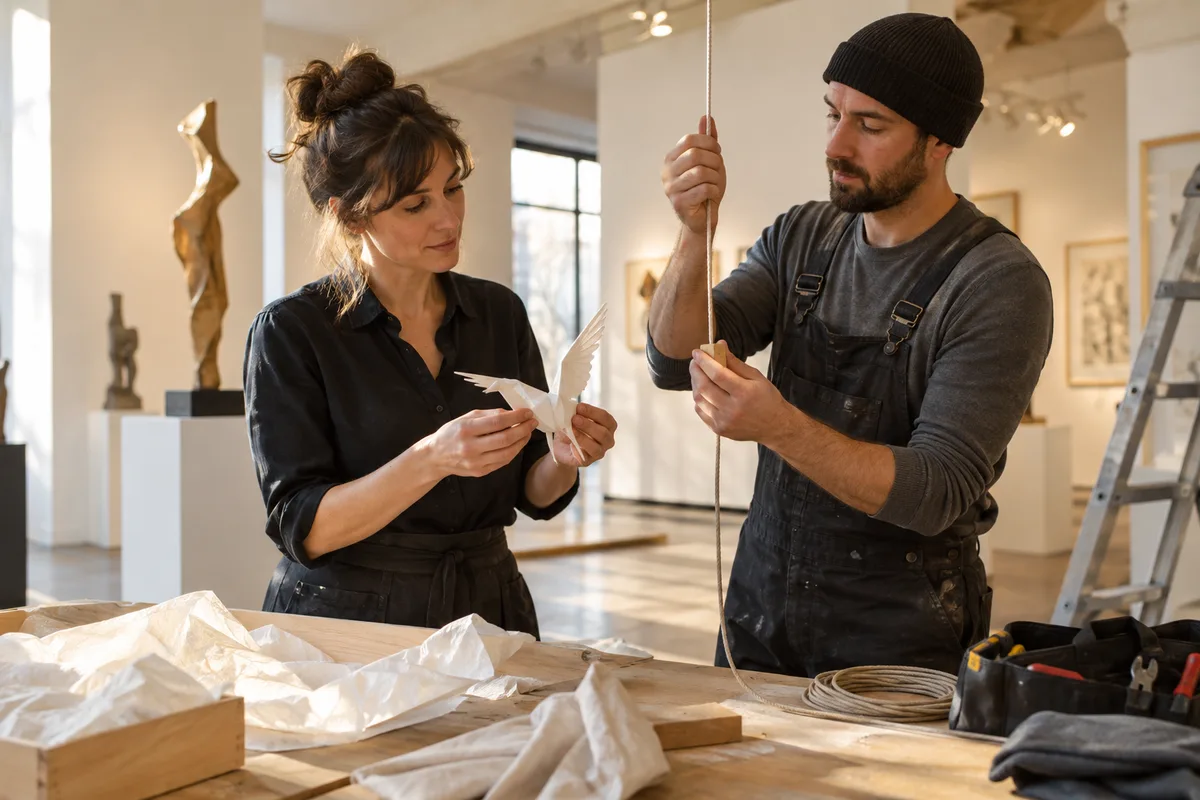
An outline becomes oppressive when every interesting question receives an answer before you have written the encounter. Inspect each planned chapter for commitments you are not ready to make. Keep a useful situation, such as the two workers checking the hanging frame, while replacing an asserted revelation with the immediate pressure that brings them together.
This does not require vague instructions everywhere. A note that anything might happen gives you little to judge. A note that Lea must show Tomas how the empty space belongs to the installation preserves both a task and room for invention. You can discover whether she admits uncertainty, offers an improvised explanation or changes the arrangement after hearing his objection.
Book setup still asks for a chapter structure. If choosing a provisional chapter count destroys your interest, that is a real fit problem. Do not disguise it as a personal failure to use the tool correctly. You may prefer drafting freely on paper and returning to Fyrlo later for a bounded planning task. An editable framework is useful only when you are willing to treat it as something you can inspect and revise.
Explore one alternative without adopting its entire future
When the scene stalls, identify the decision that needs movement. Lea could defend the empty frame or ask Tomas to remove it. Write a short alternative in your notes, or use the available planning and drafting workflow to explore a focused direction. This exercise does not imply a dedicated side-by-side comparison screen or an automatic branching-history feature.
Hold the accepted facts steady during the experiment. The exhibition still opens on Friday, Tomas still has another job, and nobody has secretly promised a different display. Change only Lea's response. Read what the new response makes possible and what responsibility it gives her. An appealing sentence alone is not a reason to keep the direction.
Compare the option with your original question: does it make you curious about Lea, or merely supply an easy explanation? Choose, reject or rewrite it yourself. Keep an unaccepted possibility in separate notes rather than presenting it as established character context. Otherwise the next continuation may receive two incompatible versions of the same event and leave you to untangle the result.

Draft a chapter, then earn the next continuation
Fyrlo supports continuing an existing project chapter by chapter, using project and story context. A manageable way to use that workflow is to review one chapter before requesting more. Do not equate the app's ability to continue with a reason to continue immediately. You need to understand the version you have chosen to carry forward.
In our example, Lea might discover while speaking that the empty frame represents a colleague who withdrew from the exhibition. That possibility can be interesting without becoming an accepted fact automatically. Read the conversation for what Lea actually says, what Tomas hears and what practical agreement follows. Rewrite a passage if it turns uncertainty into an explanation you did not intend.
Then decide what the next chapter can safely assume. Perhaps Tomas agrees to leave the frame overnight, but not to defend it publicly. That limited agreement creates a fresh situation while preserving his independence. The chapter-continuation feature page outlines the relevant app workflow. It cannot tell you whether the scene earned its agreement; that judgment comes from your reading of the characters' actions.
Let discoveries change the reference deliberately
Once you keep a discovery, bring the planning notes into line with the accepted chapter. If Lea has admitted that she does not understand her own design yet, remove a plan summary that describes a calculated publicity stunt. This is a conscious editorial change. Do not assume every planning statement automatically updates itself after you revise prose.
You can record the change in ordinary working notes and then edit the relevant plan or character details. Keep the note specific: what changed, where it became true and which future assumption needs reconsideration. That is more useful than adding a general instruction to be consistent. The latter does not identify the contradiction you want to avoid.
The Authors Guild's AI guidance stresses the role of human judgment and the need to review unreliable generated material. For this writing task, that means reading the proposed continuation rather than treating a fluent answer as confirmation that your revision worked. A discovery can deepen the book, but it may also require changing an earlier passage. Preserve that freedom and account for its consequences yourself.
Stop when the workflow starts replacing your curiosity
After a drafting session, ask what made you want to return. Was it Lea's difficult explanation, Tomas's unexpected objection or simply the promise of more generated pages? This is a personal process check, not a scientific measurement of creativity. A tool can make a session faster while leaving you less interested in the story it produced.
Look for concrete friction. If you spend the session correcting assumptions that you never accepted, narrow the next request and review the plan. If you keep generating because no option feels exactly right, try writing the exchange yourself. A paragraph with an awkward sentence may still contain the emotional direction you wanted; a polished alternative may remove it.

Choose Fyrlo for a flexible framework you will review
We recommend considering Fyrlo when you want premise, editable chapter planning, character context and continued drafting together on iPhone or iPad, and you are willing to review those elements between chapters. That is a conditional fit recommendation. It is not a claim that Fyrlo is the best app for every discovery writer or that this article has tested competing products.
Fyrlo is free to download, but features or usage may require in-app purchases. Check the current App Store information and the limits shown in the app before choosing a workflow that depends on repeated generation. We do not provide invented prices, credits or unlimited-use claims. Cost and the effort of reviewing suggestions are both part of deciding whether a tool is useful to you.
Choose a notebook or manual draft if an imposed chapter framework interrupts the experience you want. If you use Fyrlo, begin with one unresolved question, inspect the plan, keep one focused alternative provisional and review each continuation. The app assists planning and drafting; it does not guarantee quality, originality, factual accuracy, consistent character behaviour, copyright status or publication readiness. Discovery remains your work, including the decisions to discard a suggestion and keep writing in your own direction.
Good to know
Questions and answers
Can a discovery writer use a chapter plan?
Yes, if the plan remains a reference you are willing to revise. Keep a concrete situation while leaving its emotional answer open. If even a provisional chapter structure interrupts your curiosity, drafting manually may suit you better.
Does Fyrlo decide which alternative is better?
This guide asks you to make that decision by reading motives and consequences. It does not claim an automatic quality judgment or a dedicated comparison interface. Keep unaccepted possibilities separate from established context.
Does downloading Fyrlo mean unlimited free writing?
No. The download is free, but features or usage may require in-app purchases. Check current App Store details and the limits presented in the app before relying on repeated generation.