
Writing workflow
Dramatic irony: plan what the reader knows
Keep reader knowledge separate from character beliefs. Plan the gap in Fyrlo, compare one disclosure and review the next chapter.
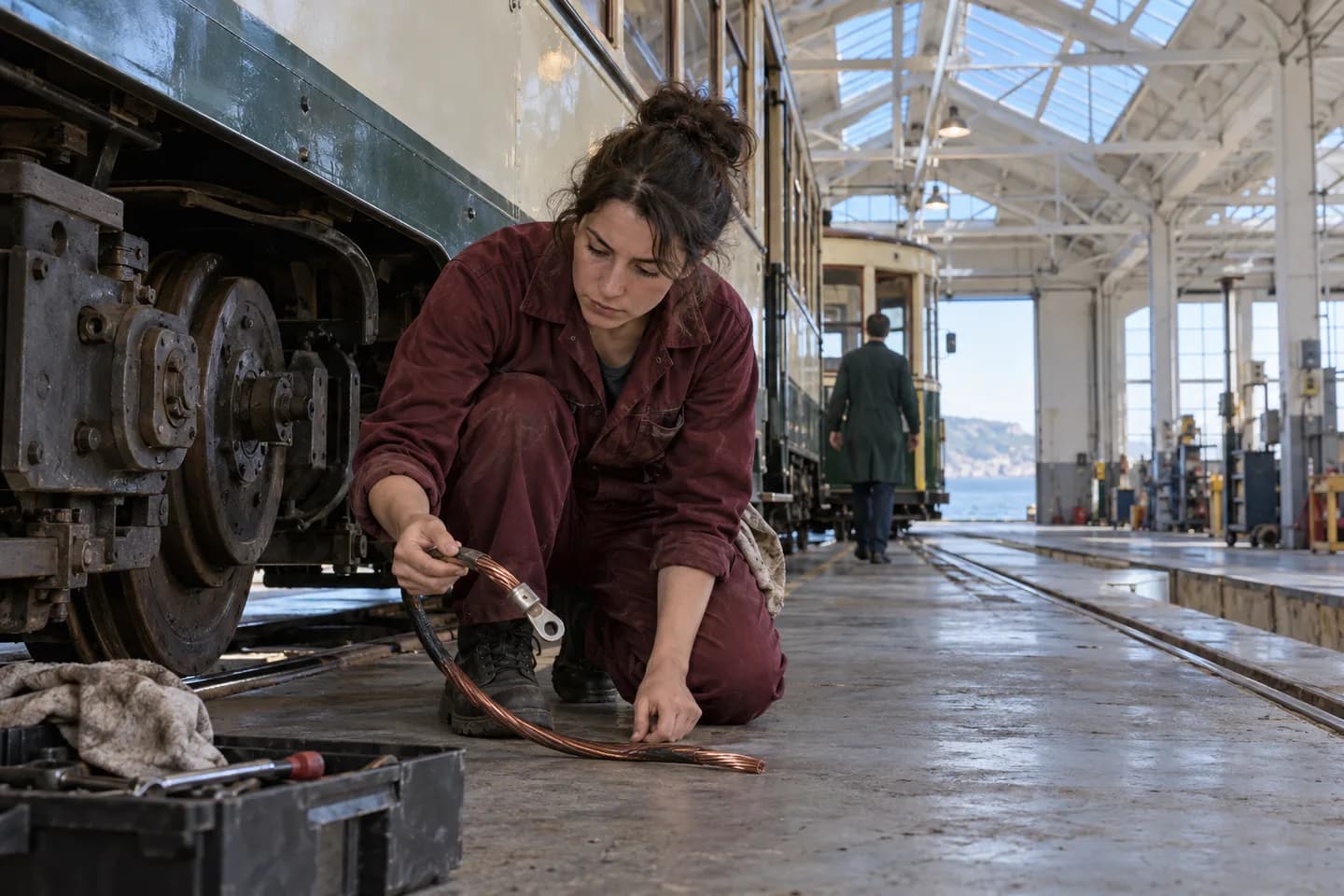
Dramatic irony lets a reader understand a situation differently from someone living through it. The useful writing problem is precise: you have shown an important fact, but the next chapter gives that fact to a character who has not learned it. The tension disappears, or the character seems careless for no believable reason. Before adding ominous dialogue, decide who knows what and how each person could acquire that knowledge.
Our original example follows adult mechanic Mara and conductor Luis in a coastal tram depot. Mara finds a disconnected cable during a scheduled inspection. Luis arrives expecting a ceremonial photograph beside the restored tram; he does not know the inspection will delay the event. Nobody starts the vehicle. The conflict concerns a promise, embarrassment and whether the truth reaches Luis before he welcomes the guests. AI Story Draft is published by Fyrlo’s developer. The workflow below uses Fyrlo for planning and drafting, with the writer responsible for every accepted fact.
Dramatic irony starts with one relevant difference
Choose a fact that changes the meaning of an ordinary action. Luis straightening his coat is unremarkable until the reader knows he expects a celebration that cannot yet proceed. The cable matters because it affects the promised event, rather than because a narrator calls it mysterious. Write the factual difference in a plain private sentence: the reader has seen Mara’s discovery; Luis has not. Keep that sentence beside your manuscript while planning the next exchange.
Oregon State University’s explanation distinguishes dramatic irony from verbal and situational irony. You do not need sarcastic dialogue or an unexpected reversal to establish unequal knowledge. Nor does every secret produce a useful ironic scene. Ask what Luis will now say or do that the reader understands differently. If the answer is nothing, revealing the cable early adds information without an effect. Change the timing of the disclosure or choose a fact connected more closely to his immediate purpose.

Give the ignorance a believable cause
Luis was arranging the arrival of the guests while Mara inspected the tram. He has not been at the bench or received her findings. That simple separation explains the gap. Avoid making Mara conceal the discovery merely because the plot needs ten more pages. She can try to speak, find Luis occupied with a practical request, and then choose a better moment. Every delay should have a cost or a reason the reader can recognize from the scene.
Imagine the obvious thirty-second conversation. Could Mara say the inspection is incomplete and Luis acknowledge it immediately? If so, either let that conversation happen or identify a specific obstacle already present in the story. Perhaps Luis assumes her first remark concerns the paintwork, because he asked about the finish. His mistaken inference should follow from something he actually heard. Do not invent a failed phone, a sudden visitor and a missed note all at once to protect an otherwise fragile misunderstanding.

Put the premise into Fyrlo before expanding it
Establish a premise that contains the human problem, the known fact and the intended consequence. For this example, the ceremony organizer promises an event before receiving the final inspection result; the mechanic must correct his expectation without letting a private delay become public humiliation. This supplies a drafting direction. It does not require the app to diagnose irony or calculate a suspense score. Keep your explanation concrete enough that a fluent generated sentence cannot quietly substitute another conflict.
Shape a provisional plan in Fyrlo, then read its proposed sequence against your premise. Separate fixed decisions from possibilities. Fixed: the tram remains stationary; Mara discovered the disconnected cable; Luis has not heard the result. Open: does Mara speak beside the cab or at the entrance? You can change the open choice while preserving the fixed facts. The character and plot context page describes the relevant planning surface. Review and edit a plan before treating it as the basis of a chapter.
Keep facts, beliefs and reader access apart
Make three short notes in your own working document: what happened, what each character believes, and what the reader has already encountered. These notes are an editorial aid, not a claimed automatic tracking feature. Mara has found the cable. Luis believes the restoration is ready for the photograph. The reader has seen the discovery in an earlier passage. A character’s belief is not proof of the underlying event, and the writer’s private knowledge is not something the reader necessarily knows.
Retain the relevant accepted details with your cast and plot context when using Fyrlo. Include the source of a belief if it matters: Luis heard yesterday that the exterior work was finished, not that every inspection was complete. That distinction makes his confidence understandable. Avoid loading the context with a complete depot history. Details that do not affect this exchange can distract from the useful boundary. Recheck the actual chapter afterward; supplying correct context does not guarantee that a generated continuation will honor every distinction.
Let an ordinary choice acquire a second meaning
Draft a small action that makes sense to Luis on his own terms. He hangs his coat carefully and asks where the guests should stand. The reader hears a logistical question and recognizes an approaching disappointment. Mara’s answer can remain practical: the entrance is better for now. There is no need for every line to announce that he is wrong. A scene often gains pressure when the character remains reasonable within the information available to him.
Choose the emotional effect deliberately. For gentle comedy, Luis might rehearse an excessively confident welcome while Mara tries to interrupt. For unease, his promise could matter to a colleague who trusted him. For compassion, he may have spent months organizing a celebration after a difficult restoration. These are different versions of the same information gap. Do not change tone accidentally by making everyone laugh at Luis when the rest of the story asks the reader to care about his work and relationships.

Compare one focused alternative
Keep the accepted premise and knowledge notes, then draft one alternative that changes only the position of the reader’s disclosure. In version one, the discovery appears before Luis arrives. In version two, the reader learns about it after his confident greeting. You can use Fyrlo to develop a focused passage from the chosen direction, but compare the actual text yourself. Preserve copies in your own document if you want to retain both. No particular comparison interface or automatic evaluation is assumed here.
Ask what each version makes the reader anticipate. Early disclosure invites attention to Luis’s next mistake. Later disclosure creates a brief reinterpretation of a greeting already read. Neither is universally better. Select the arrangement that fits the chapter’s job, and explain the reason in one private sentence. If you also change viewpoint, dialogue, setting and outcome, you cannot tell whether the disclosure timing caused the effect you preferred. A limited alternative gives you a revision you can understand and carry forward.
Continue the chapter without accidental knowledge
Before requesting or accepting the next chapter passage, state the boundary again in ordinary language: Luis has not yet learned the inspection result; Mara intends to tell him; no vehicle movement occurs; the guests remain outside. Then establish the immediate task, such as bringing the two adults together at the bench. The chapter continuation page explains the relevant drafting workflow. A useful request names the desired scene movement and the facts to retain, rather than asking for a vaguely more dramatic chapter.
Read every line attributed to Luis. Does he mention the cable before Mara shows it? Does an internal thought reveal that he secretly understood the delay all along? Either choice could work in another story, but it changes this one. Check actions too: moving guests into the tram would contradict the agreed premise. Fyrlo is a drafting aid and does not guarantee continuity, originality, factual accuracy, safety information or publication readiness. It is free to download; functions or usage may require in-app purchases. These scenes are invented writing exercises, not technical maintenance instructions or reported app tests.
Resolve the gap through a changed action
The revelation should change what Luis does next. Mara places the cable on the bench and explains that the inspection is unfinished. Luis moves the photograph to the depot entrance and tells the guests that the tram will be shown later. The fact becomes shared, so the original ironic gap closes. A new problem can follow: will he acknowledge that he promised too much? Keep that question distinct from continuing to pretend he lacks information he has plainly received.
Give a fresh reader the passage without your private notes. Ask what they knew before Luis, where Luis learned it, and which action changed afterward. If they cannot identify the earlier disclosure, revise its visibility; if they think Luis knew sooner, repair the wording that gave that impression. Finish with a knowledge pass through the neighboring chapter. Accepted discoveries must remain available later, while new information needs a believable route into the scene. The finished irony rests on readable evidence and human choices, rather than repeated hints that the narrator knows a secret.

Good to know
Questions and answers
Does dramatic irony require a tragic ending?
No. Unequal knowledge can support comedy, unease or compassion; choose the effect that fits the scene.
Does Fyrlo automatically track who knows a secret?
This workflow does not assume automatic knowledge tracking. Supply relevant accepted context and check each resulting passage yourself.
When should the revelation happen?
When learning the fact changes an action or decision. Keep the gap only while the delay remains believable.