
AI writing
Free AI story generator: from an idea to chapter one
A useful story begins with a decision, not a wall of generated prose. Shape a premise, test a scene, and keep the first chapter yours.

A free AI story generator can produce a paragraph in seconds, but speed is not the same as a beginning worth reading. The difficult part is choosing whose problem this is, what changes on the first page, and why a reader should turn to page two. Treat the tool as a drafting partner for those decisions, not as an author that can make them for you.
This guide takes one rough idea through a compact first-chapter workflow. You can follow it with a notebook alone or use Fyrlo, the writing app published by AI Story Draft, to organize a premise, review a plan, and draft a chapter. Fyrlo is free to download on iPhone and iPad; generation features and higher usage levels may require an in-app purchase. Check the App Store listing and the app's current credit display before generating. No tool can promise an original, publishable chapter without your judgment and revision.
What a free AI story generator should actually help you decide
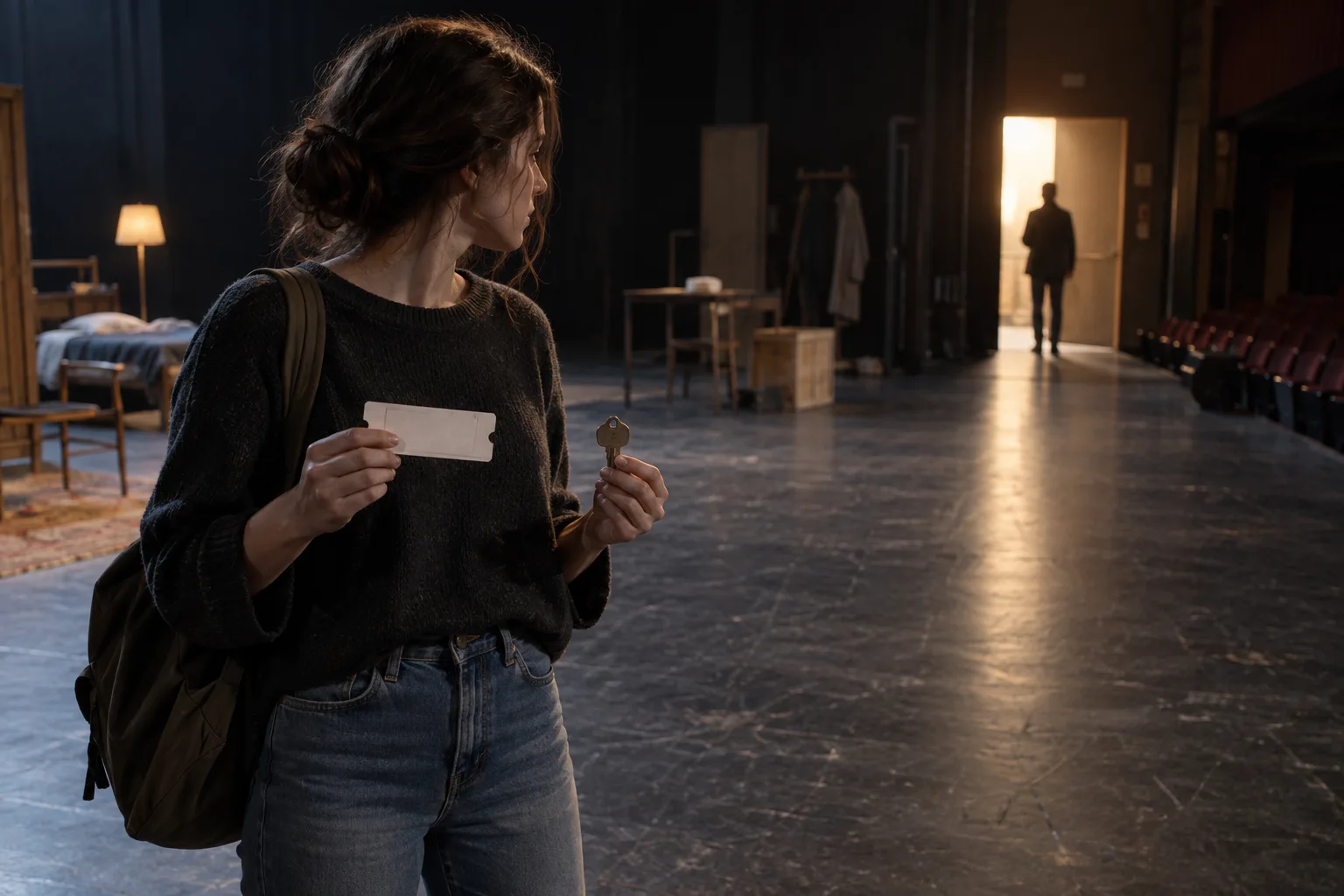
Before writing a prompt, define the outcome you want from this session. ‘Give me a story’ is too broad to judge. ‘Help me find an opening scene in which a cautious archivist must return a missing key before the museum closes’ gives you a character, pressure, and a testable scene. If the output fails, you can say exactly why: the archivist never makes a choice, the key does not matter, or the deadline is invisible.
Free access is useful for exploration, not a guarantee of unlimited chapters. Compare tools on whether you can understand what you are making, edit the direction, keep track of the premise, and see the cost of another generation. A long result can feel impressive while leaving the writer with no ownership of the next move. One controlled scene and a short revision often teach more than five unrelated full-story outputs.
Choose a scale. A short story may turn on one decision and a few consequences. A novel opening needs enough unresolved tension to support later chapters without pretending to deliver the whole plot immediately. Write your target in a sentence: by the end of chapter one, the protagonist will have done something they cannot easily undo. That sentence gives both you and the generator a boundary.

Turn a vague spark into a premise with consequences
Start with four elements: a person, a want, an obstacle, and a cost. ‘An archivist wants to return a key’ is an errand. ‘An archivist must return a key to the sealed collection before closing, but doing so will expose the only person who trusted her’ is a story. The last clause does important work: it makes the practical solution emotionally expensive. You need not know the ending yet, only the kind of price your protagonist might pay.
Write three versions of the premise and change one element at a time. In version one, the obstacle is a locked room. In version two, it is a colleague who refuses access. In version three, the key belongs to a person who disappeared years ago. Ask which version creates the most interesting choice for this particular protagonist, not which sounds most cinematic. The best premise is the one you can imagine dramatizing through action and conversation.
Give the setting one concrete rule that can affect the plot. Maybe the collection closes before the public galleries, or every object transfer requires a second signature. Avoid a page of worldbuilding in the prompt. The rule should constrain what the character can do now. If it never changes the decision, save it for later. Purdue OWL's discussion of character goals makes the same practical connection between a character's want, the obstacle, and the conflict that drives action.
Choose the character's first irreversible move
A protagonist does not need to be likeable, but the reader needs to understand why the immediate problem matters to them. Give the character a visible objective for the scene and a quieter belief that may be tested. Our archivist wants to return the key before closing; she believes that careful obedience protects everyone. The interesting opening forces her to decide whether to break procedure to protect a person. If the scene only explains her biography, the tension has not yet arrived.
Now choose a specific action that changes the situation. She signs another person's name, opens the sealed cabinet, or tells a colleague a partial truth. Each action creates a different chapter. Write down what she expects to happen and what actually happens. The gap between expectation and consequence is more useful than a list of adjectives such as ‘brave but insecure.’ It gives you a causal chain to draft.
Do not let the model assign motivation by default. An output may turn your careful archivist into a detective, a reckless hero, or a passive observer because those patterns are familiar. Reject a version that does not honor your choice. Put the character's goal and limit back into the brief, then request only the next beat. You are allowed to keep a good sentence and discard the rest.
Build a short route, not a prison for the story
Plan four beats before requesting prose: the situation, the disruption, the choice, and the consequence. For the key story, the archivist begins a routine closing check; a missing record interrupts it; she chooses to open a restricted space; and finds evidence that changes whom she can trust. Those beats are enough to draft an opening, but they leave room for discovery in voice, detail, and dialogue.
Give each beat a job. The situation should make normal life legible in a few details. The disruption should require action today, not someday. The choice must belong to the protagonist. The consequence should answer one question while opening a more urgent one. If two beats do the same job, combine them. If a beat merely repeats the premise, replace it with an event that changes the pressure.
A plan is a promise to your future self, not a command you cannot revise. Fyrlo's planning flow lets you shape a premise and editable chapter direction before continuing into a draft. For a longer project, use the plan to remember what has already happened; for one chapter, keep it brief. The product's workflow is described on the localized process page, while the novel-writing page explains when a chapter-based structure is useful.

Write a prompt that controls the scene without choking it
A useful prompt states the viewpoint, immediate objective, obstacle, setting rule, tone, and approximate scope. Try: ‘Write the opening 500 words in close third person. An archivist must return an unlogged key before closing, but the transfer log requires a colleague's signature. Begin during the closing check. Let her choose whether to ask for help. Keep the tone tense but restrained; do not reveal the key's origin yet.’ This is not magic wording. It is a compact editorial brief that gives you criteria for judging the result.
Ask for one scene, not an entire novel. Long requests encourage summaries, sudden twists, and unearned emotional conclusions. If you need a longer chapter, draft a scene, review what changed, and then provide the new story state before continuing. State what must remain consistent: names, locations, the time limit, the rule for transfers, and the protagonist's current knowledge. The model may forget or invent such facts; you must check them.
Avoid requesting a famous author's exact style or pasting protected text you do not have permission to use. Describe observable qualities instead: short paragraphs, concrete sensory detail, restrained interior monologue, or brisk dialogue. The Authors Guild discusses professional and ethical concerns around AI-assisted writing; if you intend to submit or publish, check the relevant publisher's disclosure rules and make your own editorial decisions.
Read the output like an editor, not an audience member
When a draft arrives, do not ask first whether it sounds polished. Ask whether the promised event happened on the page. Can you point to the objective, interruption, choice, and consequence? Does the character act for a reason you planted? Is the museum's transfer rule obeyed or deliberately broken? Highlight any sentence that tells you what the scene means before the action earns that meaning. Smooth prose can conceal a chapter that never moves.
Make three passes. On the first, test causality: every paragraph should follow from what the character knows and does. On the second, test specificity: replace generic phrases such as ‘a strange feeling’ with one detail only this setting could provide. On the third, test voice: remove sentences that sound like a narrator explaining your outline rather than this character perceiving an event. You can revise by hand or ask for a narrowly scoped alternative, but keep final control over what remains.
Check the beginning and ending together. An opening line should orient or unsettle, not deliver the whole backstory. The closing beat should change the reader's understanding of the problem, not simply announce a cliffhanger. In our example, a fresh signature in a ledger supposedly locked for years may be stronger than a sudden chase. It creates a clear next question rooted in the story's existing rule.

Keep the story yours when you continue
Before chapter two, record a small story-state note: what the protagonist now knows, what they believe incorrectly, what object or promise carries forward, and what deadline remains. Separate confirmed facts from possibilities. If you feed the model a possibility as if it were canon, later scenes may build on an accident. A simple note protects continuity better than repeatedly pasting a long, unreviewed draft.
In Fyrlo, work chapter by chapter and review the plan and draft before moving on. If an output changes the character's motive or resolves a conflict too soon, revise the plan or request a smaller continuation. The app can support iteration, but it cannot guarantee originality, continuity, factual accuracy, or a publisher-ready manuscript. That judgment stays with the writer. For a different project shape, compare the available formats before you commit to a long novel workflow.
There is no requirement to keep generating because a credit is available. Stop when the next useful action is reading aloud, asking a trusted human for feedback, or rewriting one paragraph yourself. Creative control is practical: it means deciding what to make next, what to reject, and when a draft is ready for another person's eyes.
Good to know
Questions and answers
Is Fyrlo a completely free AI story generator?
Fyrlo is free to download. Some generation functions or usage levels may require an in-app purchase, and limits can change. Review the current App Store listing and the credit information shown in the app before using a paid feature.
Can I publish an AI-generated first chapter unchanged?
That is rarely a good editorial decision. Check originality, continuity, voice, factual claims, rights, and the rules of any publisher or platform you plan to use. Treat generated prose as a draft to evaluate and revise, not a guarantee of publication readiness.
What if I only have a setting but no plot?
Choose someone with a concrete want and place an obstacle between them and it. A setting becomes story material when its rules affect a character's decision and the cost of that decision.
How long should the first generated scene be?
Start small enough to review carefully, perhaps a few hundred words. Ask for a scene with a clear change, revise it, and continue from the accepted version rather than requesting an entire novel at once.