
Writing craft
Four choices for paragraph breaks
Group a continuous task, mark an interruption, give a reaction space and rejoin the action. Revise boundaries without rewriting your scene.

Paragraph breaks tell readers which actions, observations and reactions belong together. A scene can contain clear sentences and still feel awkward because its boundaries separate a cause from its result or hide a useful change inside a large block. Revising those boundaries is a small, concrete task: keep the words initially, change where the paragraphs begin and read the passage again. You do not need a special app, a fixed sentence count or a dramatic event to try it.
Our original example follows Mira, an adult volunteer closing a civic chess hall. She collects the pieces into a wooden box, notices a white knight beneath a table, retrieves it and carries the box to a colleague at the door. Nothing is stolen and nobody is in danger. We will use that modest action to examine four useful boundaries: a completed unit, an interruption, a reaction and a return to the ongoing task. AI Story Draft is published by Fyrlo's developer; this is an independent manuscript exercise.
Paragraph breaks organize a reader's attention
A paragraph invites a reader to carry a group of sentences together. In fiction, that group may follow an action, a perception, a short exchange or a line of thought. The next paragraph offers a visible boundary, but its exact effect depends on the words on both sides. A break cannot make an unclear sentence clear by itself. Identify the connection you want readers to recognize before deciding how much space it deserves.
The University of Wisconsin–Madison's writing center explains how paragraph boundaries help readers recognize units of thought. Its guidance concerns academic writing, so do not transfer its examples or sentence patterns directly into fiction. Here we apply the basic question of grouping to an original scene, without prescribing a compulsory length or rhythm. The chess-hall example and all exercises are our own.
Start with a short passage whose events you understand. Mark the sentences where Mira collects, notices, retrieves and leaves. These labels describe what the text does, not what every paragraph must contain. A paragraph could include two actions that belong to one movement. Conversely, a single action might develop across more than one paragraph if its perception and consequences deserve separate attention. Your first task is to see the existing grouping.
Keep a continuous action together
Mira gathers the black pieces, checks the empty squares and puts the pieces into the box. Those sentences can form one unit because they follow an uninterrupted task. A break after every small movement might make the packing feel laborious even if you intend it as routine. Read the sequence aloud with its current divisions, then read it as one paragraph. Notice which version makes the task easy to follow without making a general claim about speed.
Do not group sentences simply because they describe the same object. A memory about who donated the box may interrupt the practical task rather than develop it. Ask whether the memory changes Mira's handling of it now. If it does, the connection might deserve space in the same paragraph. If it does not, move or shorten the memory before using a new paragraph to disguise the interruption. Boundaries work best after you understand the material.
Keep ownership of each action clear. If Mira's colleague begins collecting pieces across the hall, introducing that separate movement may need a fresh unit and a named subject. This is a matter of grouping, rather than switching viewpoint automatically. Your character and plot context can help identify who is present and what has already happened. Return to the actual sentences afterward: notes cannot tell a reader who performs an action the prose leaves ambiguous.
Give an interruption a visible place
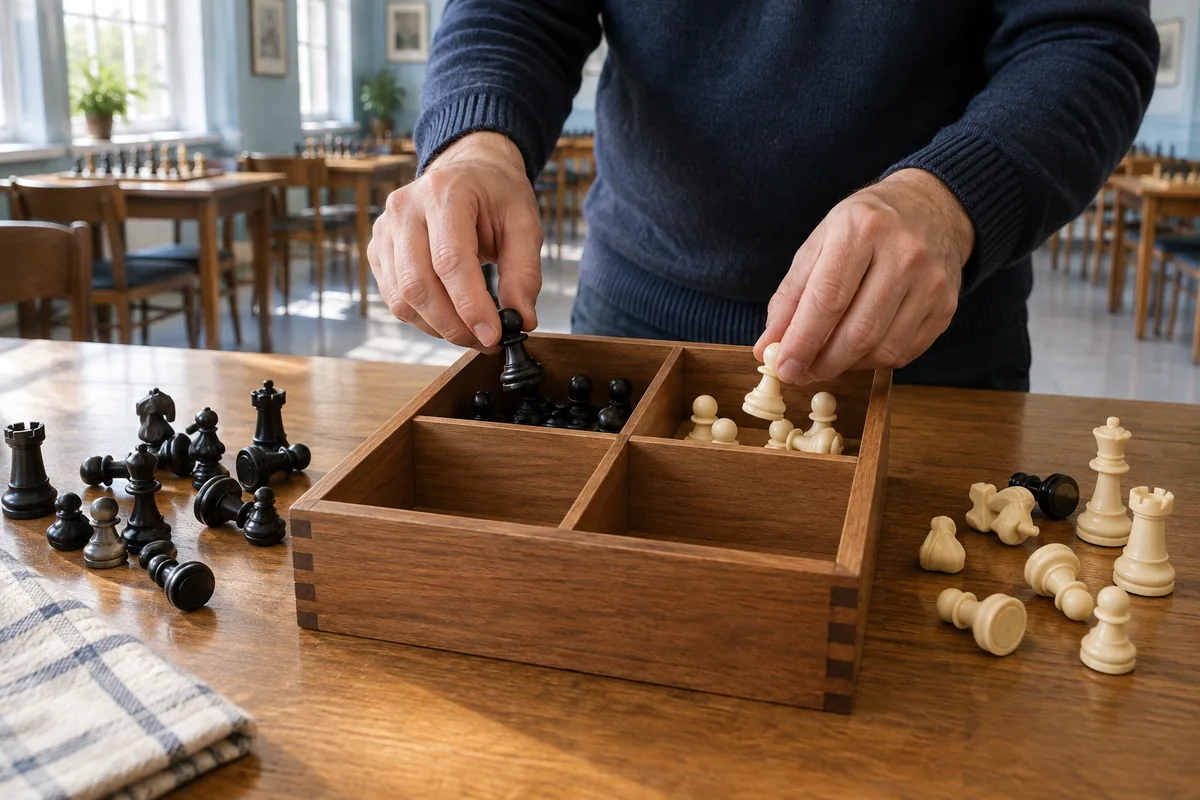
The discovery of the fallen knight interrupts packing. A new paragraph before Mira notices it can make that change easier to recognize. Try a simple boundary: the box is nearly full at the end of one paragraph; the white piece beneath the table begins the next. You are giving the interrupted task and the new attention separate places. You have not added danger or promised a revelation that the chapter does not contain.
Compare a second version with the discovery inside the packing paragraph. That version may feel natural if the piece is merely the last item to collect. The first may fit if you want the recovery to matter, perhaps because Mira checks every borrowed set before returning it. The choice depends on the scene's intention. Record the reason in plain language rather than ranking one arrangement as professional and the other as amateur.
An interruption should remain understandable across the boundary. If the first new sentence only says “There it was,” a reader may have to search backward for the missing object. Naming the knight can provide a clear restart. You can preserve a brief pronoun when its reference is immediate and unmistakable, but do not assume the white space carries information it cannot supply. Look especially carefully at demonstratives, unexplained sounds and delayed subjects.
Separate a reaction when it changes the movement
Mira kneels and retrieves the knight. She recognizes a small chip she repaired earlier and checks whether the repair has held. That reaction could stay with the recovery or begin another paragraph. Give it separate space when it changes her next action or her attention, not merely because it contains a feeling. An isolated sentence about relief may announce an emotion without showing why it deserves special weight at this moment.
Try writing the reaction first as ordinary connected prose: “The repaired edge was smooth. She turned the piece once and placed it beside the others.” Then test a break before the second sentence. The division brings the decision to return the piece into sharper view. It may also overstate a very small gesture. Judge the effect beside the preceding paragraph, where the reader learns why Mira is checking the piece in the first place.
You do not need to invent a traumatic memory to justify a boundary. Mira's care for a borrowed set is enough for this exercise. Preserve the scale of the scene and the character you have established. If a reaction requires new backstory, evaluate that addition separately. Otherwise you may credit the paragraph break for an effect actually produced by a different story. Keep the initial comparison limited to the same words and events.

Use a short paragraph for a specific emphasis
A short paragraph draws visible attention, but attention is not the same as suspense. “One compartment remained empty” may deserve a separate place if that absence changes the task. A short paragraph that merely repeats “She was worried” may add little. Ask what the reader should carry away from the isolated statement and where the surrounding sentences prepare it. If you cannot answer, reconnect the sentence and examine its wording.
A useful comparison keeps the emphasized words unchanged. Read the sentence inside its paragraph, then alone, then as the opening of the next paragraph. Those three positions ask different things of the surrounding material. Notice whether the next unit develops the sentence or leaves it stranded. Do not call the isolated version successful simply because it looks striking on screen. It still needs a meaningful relationship to the action around it.

Rejoin the task with a clear first sentence
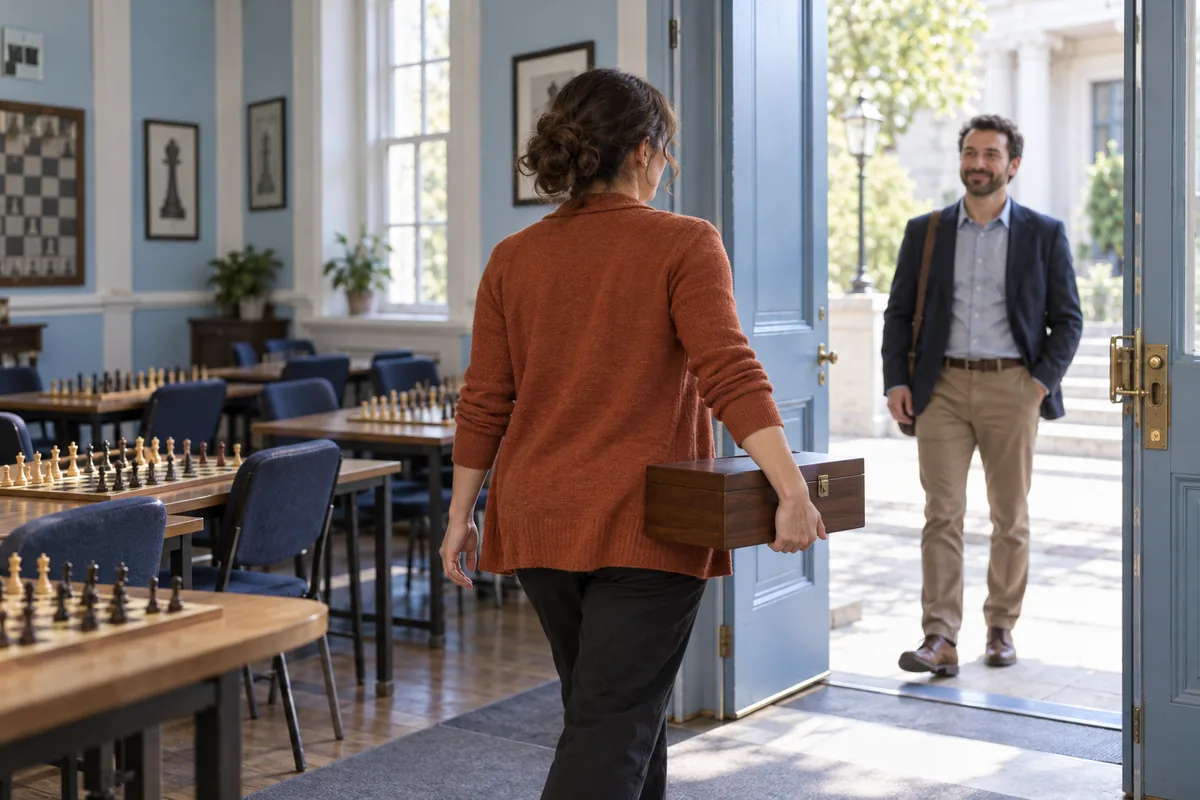
After the recovery, Mira closes the box and walks toward the door. A new paragraph can reconnect the small interruption to the larger task. Begin with an action or a concrete reference the reader can follow: “With the knight in its compartment, Mira closed the box.” This wording makes the recovery matter to the departure. You do not need to repeat the entire incident, explain the room again or add a summary of her personality.
Check what crosses the boundary. The box is now full, the knight has been inspected and the colleague is still waiting. If the next paragraph returns to an empty compartment without explanation, you have a continuity problem rather than a formatting problem. Your chapter continuation notes can keep the accepted facts visible during revision. The prose must still provide enough connection for someone who has never seen those private notes.
Distinguish an ordinary paragraph from a scene break. A paragraph can redirect attention within the same continuous encounter. A scene break may signal a larger gap in time, place or narrative access, depending on your conventions. Do not insert a blank separator just to avoid writing the connection between retrieving the piece and reaching the door. First decide whether anything meaningful has actually been skipped and whether the reader needs to recognize that gap.
Compare two layouts without rewriting the story
Duplicate a short passage in your manuscript and change only its paragraph boundaries. In one version, keep the packing and discovery together; in the other, separate the interruption and the return. Leave the event order, viewpoint, wording and known facts unchanged. This makes the comparison useful: you can identify what the grouping contributes instead of comparing a plain passage with a completely rewritten, more dramatic one.
Read each version alongside a little preceding and following text. A boundary that seems clear in isolation may repeat a change the previous paragraph has already established. Ask a fresh reader where they thought the action shifted and what seemed important. Their answer is an observation, not a quality score. If they identify a different shift from the one you intended, locate the sentence responsible before deciding whether to move a boundary.
You can optionally explore a focused wording alternative in Fyrlo after completing the manuscript exercise. Supply the accepted event and purpose, then compare the result yourself. This is not an automatic paragraph evaluator or a guarantee of style, continuity or reader response. Fyrlo is free to download, but features or usage may require in-app purchases. You can complete every boundary decision in ordinary notes without that optional assistance.
Check presentation after choosing the boundaries
Once the grouping works, review how paragraphs appear in the format you intend to share. A manuscript, a website and an ebook may represent boundaries differently. Follow the relevant submission or publication requirements, and preview the actual output when possible. Do not judge the number of paragraphs by the number of lines on one device: a narrow screen wraps sentences more often without changing their relationship to one another.
Separate presentation corrections from narrative decisions. An accidental empty paragraph should be removed, while an intentional scene separator needs consistent treatment. A paragraph that becomes longer after a font change has not necessarily become badly structured. Return to its action, attention and purpose before splitting it. This keeps an ordinary formatting adjustment from silently altering the emphasis you chose during revision.
Finish with a short record of your four decisions: which task stays together, which interruption gets a boundary, which reaction earns emphasis and how the next unit rejoins the movement. Then read the scene through without studying the layout. If you can follow Mira from packing to departure and understand why the fallen piece briefly matters, the boundaries are doing useful work. Keep them deliberate, and let the next scene require its own choices.
Good to know
Questions and answers
Is there a fixed paragraph length?
No. Choose boundaries by purpose and connection, then check the required presentation format.
Does every reaction need a new paragraph?
No. Separate it when the change in attention or action deserves that emphasis.
Do paragraph breaks replace scene breaks?
No. Decide separately whether there is a meaningful gap in time, place or narrative access.