
Story logic
Plot holes: is a missing step the problem?
Check one access problem, preserve the accepted facts and compare two bounded repairs before continuing the chapter with Fyrlo.

Plot holes can look like a sentence that is perfectly clear on its own. Eva opened the display case and placed the wooden bird inside. The problem appears when you remember the previous page: the case was locked, and Leon had its only key. A request to make the passage smoother will not necessarily repair that missing step. It may simply make an unsupported action sound more convincing.
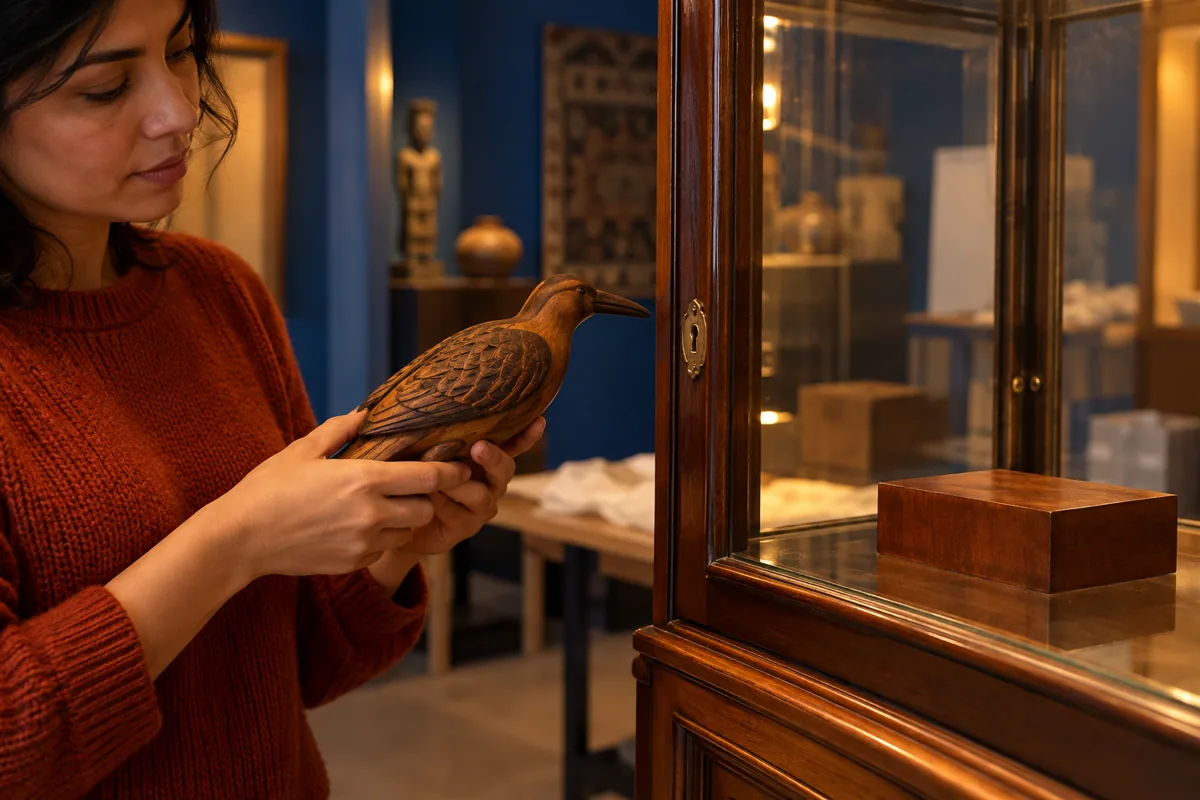
This guide uses an original gallery scene to check one causal gap before asking Fyrlo for a bounded revision. Eva needs to arrange a borrowed wooden sculpture in the case before an evening visit. Leon is nearby and holds the key. No lock is broken, no duplicate key has been established, and Eva has not yet received permission to open it. Those modest facts give us a useful problem to diagnose without inventing a dramatic emergency.
Check whether plot holes are really the problem
Begin with a precise question: how does Eva gain access to the case? A vague note such as “the scene feels wrong” invites changes everywhere. A question tied to one action gives you something to verify against the manuscript. Read the setup and the disputed action together. If the key transfer is already clear in a nearby paragraph, the issue may be visibility or phrasing rather than a missing event.
The Living Handbook of Narratology, hosted by Universität Hamburg, discusses causal connections as one aspect of plot. Sequence alone does not settle how events are connected. That limited distinction informs this check; our gallery, characters and repair process are original. The source does not supply a test that automatically classifies every unanswered question as a flaw or guarantee that software can detect one.
Allow for deliberate withholding. A story may postpone an explanation while giving readers a reason to expect it. An unusual event may also be consistent with rules already established in that fictional world. Our case is narrower: ordinary access has been restricted, and the next action assumes access without showing or establishing how it became available. Treat that as a revision question, not a universal definition imposed on every kind of fiction.
Establish the premise and the accepted facts
Before generating prose in Fyrlo, state the premise in plain language: Eva wants the sculpture displayed, and Leon controls the key. The scene needs a credible decision that lets the display proceed. Keep the desired outcome provisional. If permission is refused, the sculpture may remain outside the case; that would be another possible story development, not necessarily a failed attempt at writing the scene.
Separate accepted facts from ideas you are merely considering. Leon having the only key is established. Him trusting Eva with it is not yet established. A possible handover should therefore enter the plan as a proposed action, not as a fact that supposedly happened earlier. Keeping this distinction helps you recognize when a generated candidate has quietly rewritten the setup instead of responding to it.
Keep character and plot context together in the working material you give the app. Include who knows the case is locked, who can open it and what each person is trying to do. You do not need to paste an entire manuscript to test this local exchange. Supply the necessary passage and a concise account of the constraints, then inspect whether the response actually respects them.

Plan the missing decision before polishing prose
Outline a small chain: Eva reaches the case, realizes she needs access, asks Leon, receives an answer and acts on it. This is a provisional plan for our scene, not a required shape for every repair. Its useful feature is that the transition from wanting access to having access is available for inspection. You can now decide what Leon actually agrees to do.
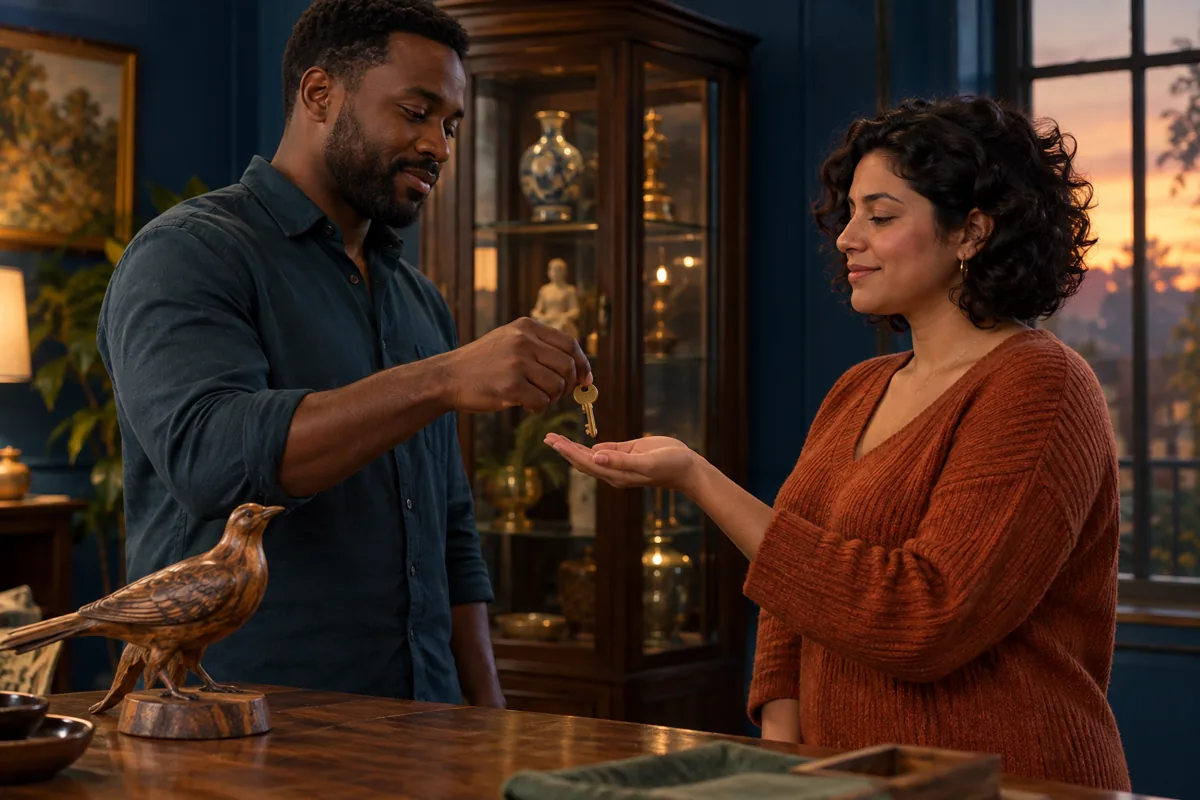
For one candidate, choose a handover. Leon gives Eva the key after she asks, and she opens the case. For another, Leon may keep the key and open it himself. Both preserve the established existence of a single key, but they create different actions and relationships. Select one to draft first instead of asking for a list of increasingly dramatic explanations with no connection to the current scene.
Check the intended consequence in each plan. If Leon hands over the key, someone must still hold or return it afterward. If he opens the case, Eva can concentrate on placing the sculpture. A repair creates facts that later sentences must accommodate. Resolve those immediate consequences in your notes before treating a polished paragraph as ready to become part of the accepted chapter.
Request one candidate that preserves the constraints
Ask Fyrlo for a short candidate that follows Eva’s viewpoint, retains Leon as the only key holder before the exchange and includes an explicit decision about access. Keep the endpoint close: the case is open, and Eva is ready to place the bird. This is a focused drafting request. It does not assume the app has a dedicated plot hole detector, a continuity score or an automatic verification panel.
Read the candidate for changed claims before judging its style. Did Eva suddenly find a spare key? Did Leon leave the room, making his participation impossible? Did the case become unlocked from the start? Each change may remove the original constraint instead of addressing it. If you want to change that constraint, revise its earlier setup deliberately and check the affected passages as a separate decision.
Look for an action you can point to. “Everything was arranged” may sound reassuring while still avoiding the question. A plain exchange can be more useful: Eva asks; Leon passes the key; she unlocks the case. You can refine the language after the relationship between those events is clear. The purpose of this candidate is to test a workable connection, not to settle every sentence of the chapter.
Compare an alternative without changing the problem
Save the first candidate before exploring the second plan. Ask for a version in which Leon opens the case himself while keeping the same setting, viewpoint, sculpture and immediate endpoint. This lets you compare two decisions about access. If the second version adds an alarm, a new employee or a hidden entrance, separate those developments from this comparison rather than accepting them as incidental improvements.
Compare what each version asks of the characters. A handover gives Eva temporary responsibility for the key. Leon opening the case keeps that responsibility with him. Either might fit your established relationship, but neither automatically proves trust, suspicion or a permanent personality trait. Read the exchange against the character context already accepted. Decide which consequence belongs in this particular story and why it matters here.
You can perform the same comparison manually in a document. Write the causal connection in a sentence before drafting either paragraph, then compare the surrounding action. App assistance is useful only if the candidate helps you evaluate a choice you can understand and review. More alternatives do not necessarily improve the decision. Stop requesting variations when you have enough information to choose a coherent local version.
Review time, knowledge and physical action together
A key handover can repair access while creating another difficulty. Eva cannot accept a key with both hands occupied by a sculpture unless the scene provides a plausible arrangement. She might put the bird safely on the nearby preparation table before asking. That is a story fact to establish, not an invitation to add detailed instructions for handling every kind of artwork. Keep the physical sequence understandable at the scale of this scene.
Check what Eva can know. If Leon’s decision is expressed only in his unspoken thoughts, a close scene following Eva may still lack the information that guides her action. A reply, an offered key or an opened door can make the decision available to her. Do not use a change of viewpoint merely to explain away a gap that the chosen perspective can address through observable behavior.
Check timing as well. Leon needs to be present before he can answer. If an earlier paragraph sends him elsewhere, either revise that departure deliberately or choose another supported outcome. Do not preserve two incompatible versions because each sentence reads well separately. The relevant unit is the connected sequence of events across the join, including the setup that makes the problem worth solving.
Accept the repair and continue chapter by chapter
Choose a version and update the accepted context before requesting a continuation. For the handover version, record that Eva received the key and opened the case; the sculpture is still outside until she places it. State where the key ends up once the action is complete. For the other version, preserve Leon as the person who opened the case. Do not merge incompatible details from both candidates.
Continue with the next relevant action in Fyrlo using the accepted passage and those concise facts. Review the first new paragraph against the repaired one. If the continuation again treats the case as locked or gives Eva a second key, address that location before moving on. Planning and chapter drafting support can help organize the work, but it does not independently certify the facts you decide to keep.
Read a little farther than the repaired sentence. A later line may depend on the old arrangement, such as Leon still needing to unlock the case after Eva has already opened it. Mark the affected passage and revise its consequence. You do not have to regenerate the whole chapter for every small change, but a local repair is complete only when the nearby writing can continue from the accepted version.

Test the connection without promising a flawless story
Put your notes aside and read the setup, exchange and placement together. Ask another reader how Eva gains access, without explaining the answer first. If they can point to the relevant action, you have useful feedback about this passage. Their agreement is not proof that the entire novel has no inconsistencies. Repeat focused checks where actual questions arise instead of treating one successful repair as a universal quality certificate.
AI Story Draft is published by Fyrlo’s developer. Fyrlo is free to download; features or usage may require in-app purchases. Generated suggestions do not guarantee factual accuracy, logical consistency, originality, literary quality or publication readiness. Keep copies of accepted writing and check proposals against the manuscript. A confident explanation supplied after the fact is not evidence that the explanation was present in the story all along.
Finish with a concrete revision note: one key, a visible access decision, an understandable transfer or opening, and a continuation that preserves the chosen result. Remove temporary planning notes from the reader-facing text. The goal is a supported next action in this scene. Once that connection holds, return to the story and let Eva place the sculpture rather than adding explanations that the reader no longer needs.
Good to know
Questions and answers
Is every unanswered question a plot hole?
No. Check the established rules and whether information is deliberately delayed. Diagnose the specific connection that seems unsupported.
Can a repair be only one sentence?
Sometimes. The size depends on the missing decision and its consequences; check the surrounding setup and continuation.
Does Fyrlo automatically verify story logic?
No such guarantee is made here. Review generated candidates against accepted facts and the actual manuscript.