
Writing craft
Psychic distance without losing your viewpoint
Move between overview and personal perception without changing the viewpoint. Revise one event at three distances and choose its purpose.
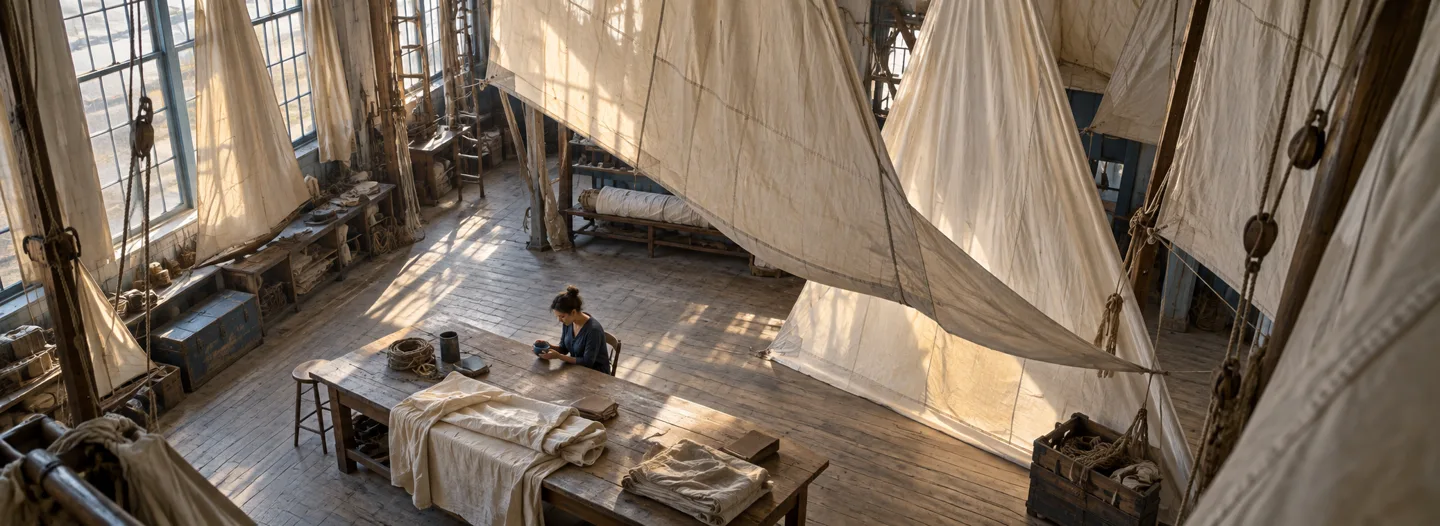
Psychic distance changes how closely a passage follows a character's experience. Your scene may use the same viewpoint throughout and still move from a room-sized overview to the texture that matters to one person. The difficulty comes when those changes feel accidental: a paragraph invites intimacy, then suddenly explains the character from outside or gives information nobody present could know. You can revise that movement without replacing your narrator or adding more thoughts.
Our original example follows adult sailmaker Ada into a quiet workshop. A colleague has left a blue ceramic bowl on the long table. Ada needs to return it before closing, but she has postponed a conversation with its owner. Nothing supernatural happens, and the bowl conceals no secret. The problem is deciding what the narration lets us experience at each moment. AI Story Draft is published by Fyrlo's developer; the method below works with a manuscript and ordinary notes, without requiring an app.
Psychic distance concerns access and language
Think of distance as a combination of what the passage selects, how much it explains and whose language shapes the description. A distant sentence might establish the workshop's position and Ada's routine. A closer sentence could select the cold edge against her thumb, because she has just picked up the bowl. Both can remain in third person. Changing a pronoun is therefore not a reliable way to change proximity, and adding an italic thought is not automatically the solution.
The University of Nevada, Reno's writing-center explanation presents psychic distance as a craft concept for examining a reader's relationship to fictional events. Use that concept as a question rather than a numerical rule. No distance is inherently better. Overview can compress a routine or reveal the shape of a room; closeness can make a particular perception immediate. Your task is to choose the access that serves this passage and make the transition readable.
Avoid treating the camera metaphor literally. A camera can approach Ada's face, but prose may remain distant if it explains her personality in abstract terms. Conversely, a single sentence about an object can feel close if its selection and vocabulary belong to her. Underline words that appear to come from the narrator and circle details Ada would notice now. That small distinction gives you something concrete to revise.
Fix the viewpoint and available facts first
Before adjusting distance, name the person whose experience organizes the scene. Here it is Ada. Write three facts she knows: who owns the bowl, where that colleague usually works and what conversation she has delayed. Then record one thing she does not know, such as whether the colleague is still nearby. These are private working notes. They prevent a useful overview from turning into an accidental visit to another person's mind.
A stable viewpoint does not forbid every statement of context. Ada can recognize the workshop's ordinary arrangement, recall a routine and interpret a familiar sound. But a sentence asserting that the colleague feels disappointed needs a basis or a deliberate change in narrative access. If Ada guesses, make the guess belong to her. If the narrator genuinely knows more, that is a different choice and should be established consistently.
Keep the event fixed during this exercise. Ada enters, notices the bowl, takes it and goes toward the door. Do not improve the close version by adding an argument or a startling discovery. Otherwise you are comparing different plots rather than different narrative distances. If you need a fuller reference for accepted cast facts, use your character and plot notes before editing the prose. The same discipline helps when you later revise a longer chapter.
Let a distant overview do useful work
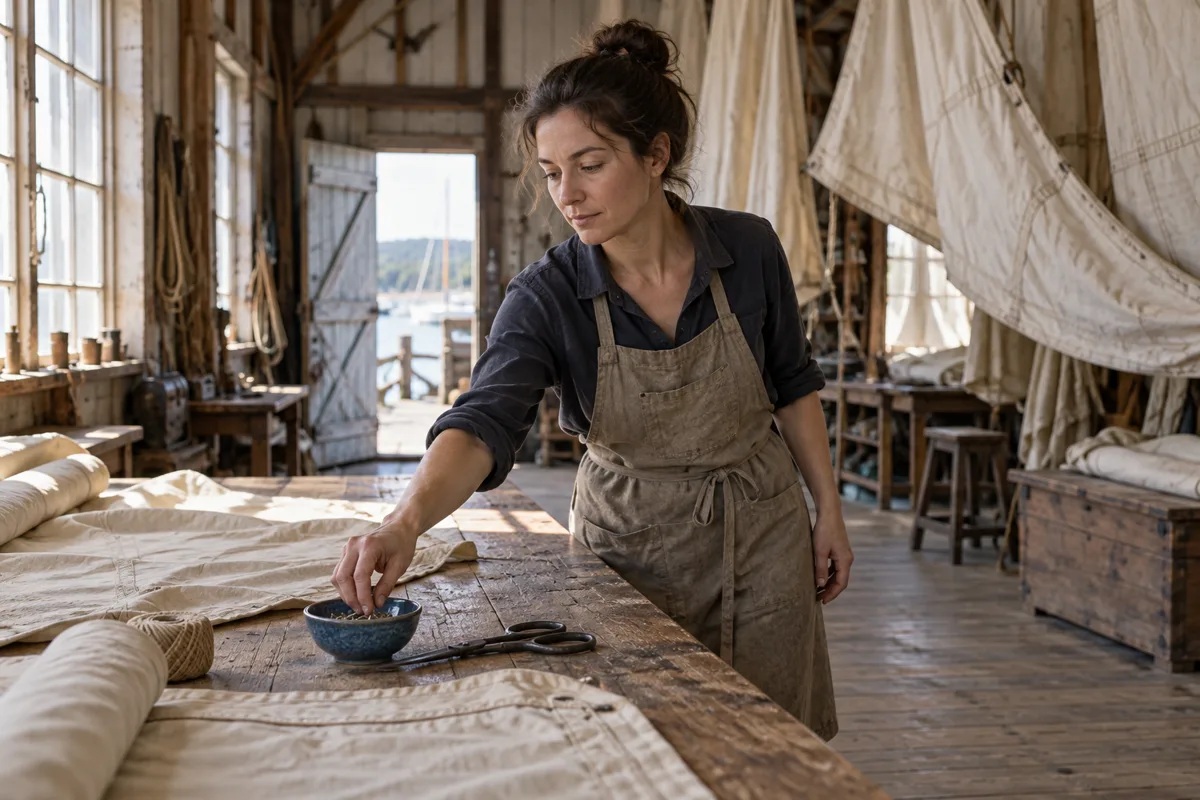
Begin with an overview that earns its space: the linen sails hang above the table, the doorway lies beyond the benches and the afternoon light is leaving the windows. These details establish the room Ada must cross. They also make later movement understandable. You do not need a catalogue of every tool or a history of sailmaking. Select enough to orient the reader and support the immediate action.
A possible opening is: “By closing time, the loft had become a long strip of pale cloth and wooden shadows.” This sentence gives an impression of the place without claiming Ada's private response. The next sentence can place her at the table. Ask whether the overview supplies location, scale, time or a meaningful pattern. If it supplies none of these, shortening it may help more than moving closer.
Do not assume a distant beginning must feel cold. A narrator can have warmth, rhythm or wit while preserving an overview. Equally, a close paragraph may remain restrained. Tone and distance influence each other but are not identical. Judge the passage's actual effect rather than labeling every descriptive sentence detached. Read the opening aloud and identify the moment at which Ada becomes the center of attention.
Select a detail the character needs now
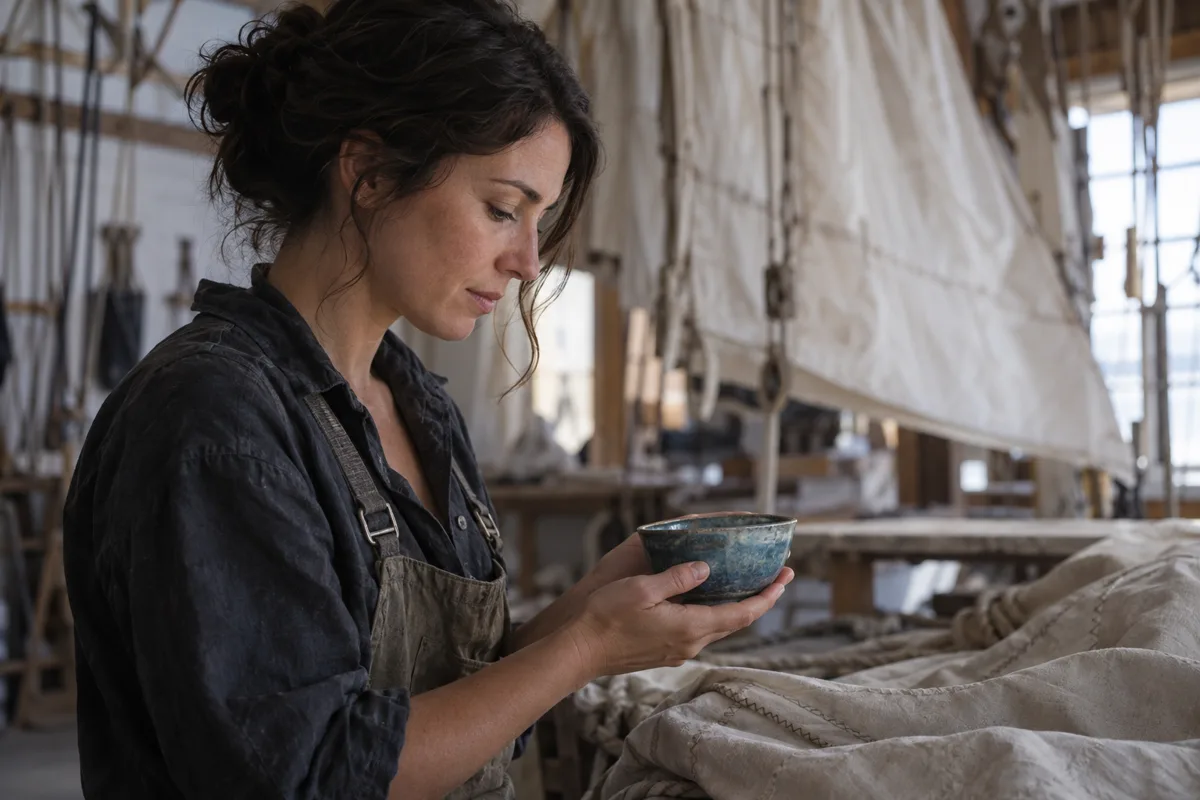
To move closer, choose a detail with an immediate reason to matter. The bowl's uneven rim catches Ada's thumb as she lifts it. She notices it because she is holding the object, not because the author needs a decorative close-up. The linen fibers beside it may matter if she brushes them away before carrying it. Two purposeful details usually do more than a list of colors, smells and textures.
Try this short bridge: “Ada lifted the bowl. A ridge in the glaze caught her thumb.” The first sentence changes the action; the second narrows the experience. You have not inserted a new fact about someone else, and you have not declared an emotion. If you then describe her hesitation, the reader has a physical moment from which that hesitation can grow. This is a practical transition, not a claim that sensory detail guarantees immersion.
Ask why this detail belongs to Ada rather than any observer. Her work may make her sensitive to uneven surfaces. Her immediate purpose may make her check whether the bowl is safe to carry. Choose one reason and let the wording support it. Avoid using technical terminology you have not verified. The example concerns narration, not instructions for workshop equipment or a lesson in ceramic manufacturing.

Bring the language closer without exaggeration
Closeness also depends on diction. “The object possessed an irregular edge” describes the bowl from a removed, formal position. “That stubborn ridge again” suggests recognition and a personal evaluation. Neither sentence is universally preferable. The second only works if this kind of phrasing fits Ada's established voice and relationship to the bowl. A sudden comic expression could make her sound like a different character.
Build a small vocabulary reference from the existing manuscript: what does Ada call a delay, a mistake or a familiar nuisance? Choose words you already have reason to associate with her. You are looking for continuity, not an accent performed in every sentence. Let one or two choices influence the passage and leave ordinary connective language alone. A paragraph can remain readable without turning every noun into a personality signal.
Check explanatory sentences carefully. “She was a person who avoided awkward conversations” supplies a general diagnosis. “The door was still open; she could return the bowl now” keeps attention on an available action. You may want the diagnosis elsewhere, especially in summary. Here, however, ask whether explanation interrupts the approach you have just created. Revise the function of the sentence before simply replacing it with a thought.
Build a bridge back toward overview
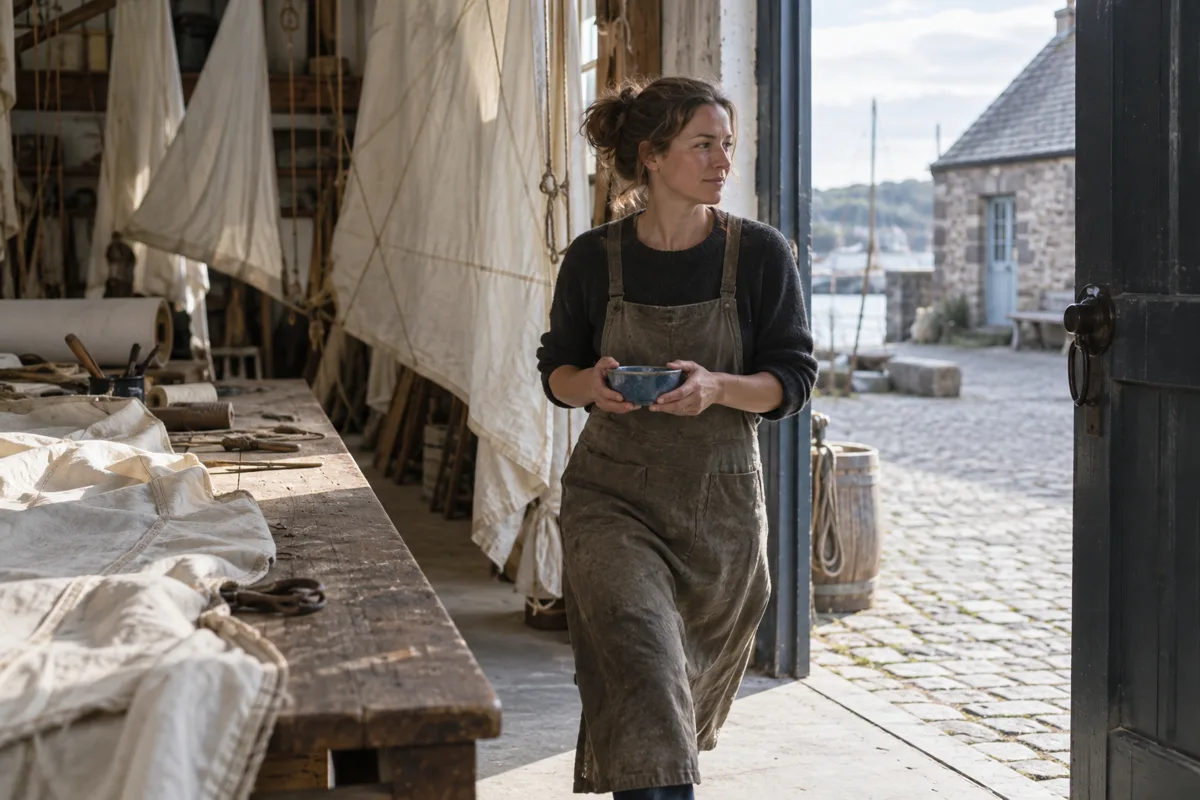
Moving outward matters as much as moving inward. After the moment with the rim, Ada can carry the bowl toward the doorway. The action reconnects her hand to the room and the next location. A paragraph about the loft's evening routine will then have a physical point of departure. Without that bridge, an abrupt historical overview may feel like the narrator has abandoned the present scene.
Try: “She set her thumb beneath the rim and crossed the remaining length of the table. Outside, the courtyard had begun to empty.” The scale expands through movement and a visible boundary. You can now decide whether the courtyard belongs to Ada's immediate perception or to a broader narrator statement. Make that decision explicit in your revision notes so the next paragraph follows the same logic.
You do not need a transition sentence at every shift. Sometimes a deliberate cut or a paragraph break provides exactly the contrast you want. The test is whether the reader can locate the new access and understand its purpose. Smoothness is one option, not an obligation. Preserve a sharp change if it produces a useful effect you can explain; repair it if you only notice it because the perspective becomes confusing.
Compare three versions of the same event
Write a short overview, a version centered on visible action and a version shaped by Ada's selected perception. Keep the event, order and known facts identical. Limit the exercise to about a paragraph per version so that revision remains focused. Then state what each version makes easy to understand and what it leaves outside the reader's experience. Do not rank them by how many sensations they contain.
The overview may clarify the workshop's scale. The action version may make the movement efficient. The closer version may emphasize the cost of delaying the conversation. Choose the version that serves this point in the chapter. You can also keep part of each, provided the joins remain deliberate. Your final passage should have a reason for changing distance, rather than becoming a collection of favorite sentences.
If you optionally explore a continuation in Fyrlo, provide the accepted viewpoint, event and distance choice alongside your cast context. Ask for one focused alternative and review its actual prose. This is not an automatic distance meter or a guarantee of stylistic control. Fyrlo is free to download, but features or usage may require in-app purchases. The independent exercise remains available in your manuscript, with or without that optional drafting aid.
Review the change across the chapter
Read beyond the revised paragraph. The preceding passage establishes expectations, and the following one must carry the chosen access forward or change it intentionally. Mark any sentence that tells you what another character secretly believes. Mark any explanation that appears just as the scene becomes immediate. Decide whether each is justified before removing it; some may belong to the narrator you have already established.
A fresh reader can help with a precise question: where did you feel the passage move closer or farther away, and where did you lose orientation? This asks for evidence from the page rather than a general approval score. Readers may respond differently, so use their observations to locate sentences and compare them with your intention. Do not claim a successful revision merely because one person preferred the more detailed version.
Keep a short revision record: chosen viewpoint, useful overview, selected detail, language shift and outward bridge. It will help you continue the next chapter without reproducing the exercise in full. Narrative distance becomes manageable when you can point to the decisions that create it. You do not need maximum closeness everywhere; you need the right access at the right moment, supported by language and action the story has earned.
Good to know
Questions and answers
Is close narration always better?
No. Overview and closeness have different uses; choose the access that serves this passage.
Does distance mean changing viewpoint?
No. Selection, explanation and diction can change while the viewpoint character stays the same.
Can Fyrlo measure distance automatically?
This exercise does not assume an automatic measurement. Review the language and continuity yourself.