
Fiction craft
Scene transitions without unnecessary detours
Keep readers oriented when time, place or viewpoint changes. Choose a direct cut or a short bridge, and preserve what connects the scenes.

Scene transitions can make a finished chapter feel unfinished. Your character leaves a greenhouse determined to repair a broken pane; the next paragraph puts her in a workshop, but the reader cannot tell whether five minutes or five days have passed. Adding every step of the journey would explain the move while burying the important action. A useful transition gives the reader enough footing to understand the new moment and preserves the reason to keep reading.
This guide uses an invented story about Mara, a gardener preparing a botanical conservatory for a public opening. You will check the edge between two scenes, choose which changes need a cue, and compare a direct cut with a short narrative bridge. The method works with a printed draft and a pencil. It concerns the connection between scenes, rather than the events you choose to put inside them.
Scene transitions begin with a clear change
Read the last paragraph of one scene and the first paragraph of the next together. Before improving the language, write down what changes: time, place, the person whose perceptions guide the passage, or some combination of these. Then identify what remains active. A promise, an unanswered question or a practical task can connect two moments even when their surroundings differ. This small diagnosis prevents you from adding atmospheric sentences to a gap that actually needs a basic fact.
Mara ends the greenhouse scene by deciding to ask a glassworker for help before the opening. Her next scene begins at his workshop. The reader needs to recognize the workshop and understand whether the request is immediate or delayed. The reader also needs to feel that the damaged pane still matters. They do not need an account of how Mara found her boots unless finding the boots changes her decision. Keep the transition's job narrow enough to assess.
Novelist Patricia C. Wrede's transition toolbox distinguishes changes in time, place and viewpoint. Treat those categories as questions to ask your draft, rather than a requirement to announce all three at every boundary. If the same person remains in the same room a moment later, repeating her name, the room and the time can sound mechanical. Supply the information that became uncertain. A blank line indicates a boundary; the new paragraph still has to make its circumstances intelligible.
Skip the interval, preserve what changed during it
A time jump is useful when the interval contains little the reader needs to witness. Suppose Mara makes the decision at dusk and visits the workshop the next morning. An opening such as “By morning, the chipped pane had become the first item on her list” marks the delay through its consequence. You can follow it with a concrete workshop detail.
Ask whether anything consequential happened inside the omitted interval. If Mara spent the night negotiating permission, the workshop visit may depend on that result. You can summarize the permission briefly when the new scene needs it. If the negotiation changes whom she trusts, however, it might deserve its own scene. A transition should not conceal a turning point simply because writing the turning point would take longer. Distinguish routine travel from an event that alters the available choices.
Time cues can also arise from light, an appointment or a task already established. Fresh dew suggests morning but cannot reliably tell a reader that precisely three days have passed. Use a direct phrase when precision affects the plot. Conversely, if the exact hour changes nothing, a natural detail may be enough. Test the cue against the question the reader must answer. Decorative weather does not solve an unclear deadline, and a timestamp does not explain an unexplained emotional change.

Give the new place a useful detail
Once the scene moves, choose a detail that belongs to the new location and affects the immediate action. At the workshop, Mara might have to wait while the glassworker clears a padded bench. That action locates her and delays her request at the same time. An inventory of walls, windows and furniture would use more space while doing less work. Orient through something a person touches, avoids, hears or tries to use.
Keep the route off the page when it has no narrative purpose. “At the workshop, Mara set the key beside the glassworker's measuring frame” is a sufficient arrival in many drafts. If she discovers that the bridge is closed on the way, the route now matters: it changes her schedule or forces another choice.
Be careful with locations that resemble each other. Two glass buildings can share damp air and reflective surfaces, so a general sensory description may leave the reader in the greenhouse. A workbench, a transport crate or the glassworker's ongoing task makes the workshop distinct. You can establish that difference over two sentences instead of placing every fact in the first one. Read the opening without the preceding chapter heading and check whether the place becomes clear before its layout matters.

Establish whose experience shapes the new scene
A change of viewpoint asks the reader to rebuild more than the setting. If the next scene follows the glassworker, begin with something he notices, wants or does. Naming him alone may not establish that the narrative has moved into his experience. “Jonas steadied the pane before he looked toward the visitor in the doorway” gives him the immediate action. His subsequent perceptions can clarify the perspective without an explanation of narrative technique.
Do not carry Mara's private thoughts into Jonas's scene unless your chosen narrator can provide that access. He may see her turning a key between her fingers; he cannot know the exact promise she made to the conservatory manager merely because the reader heard it earlier. Distinguish observable evidence from information held elsewhere in the book.
Use a visible scene boundary when it helps signal the shift, and keep the form consistent with the manuscript's presentation. A chapter heading or an intentional scene-break marker can prevent a blank line from being mistaken for ordinary spacing. Publishing formats handle spacing differently, so review the actual layout later. The marker prepares the reader for a change; it does not excuse an opening that could belong to either person. The first meaningful action should make the new perspective useful.

Carry a consequence across the boundary
The strongest connection often comes from what the previous scene made necessary. Mara's damaged pane creates a request; the request brings her to Jonas's bench; his answer changes what she can promise about the opening. This chain lets the reader follow purpose across a jump in time or location. You can omit much of the physical movement because the reason for the next scene remains visible.
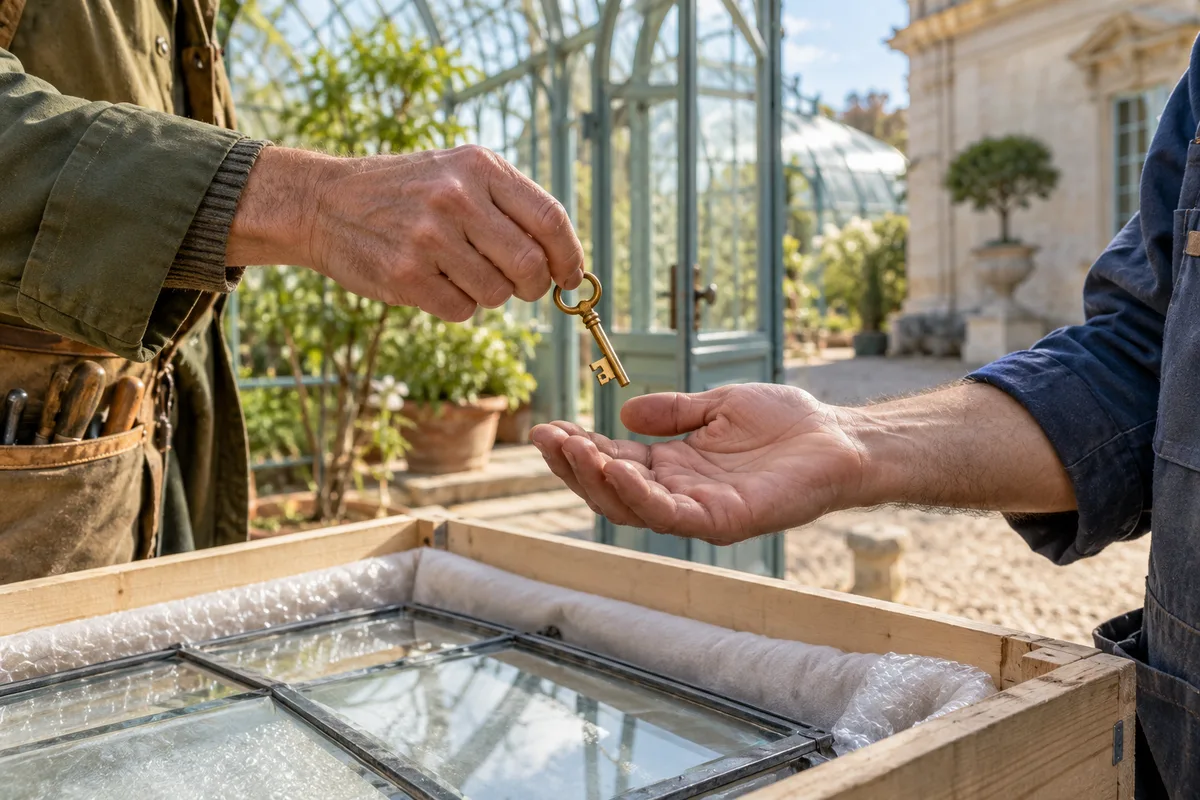
A repeated object can support that connection when its role is clear. Mara takes the conservatory key to the workshop because Jonas will need access to measure the frame. The key is therefore part of the task, not merely a decorative match between two paragraphs. If you end one scene on a key and begin the next on another shiny object, the resemblance may sound elegant while leaving the causal connection vague. Ask what the repeated detail helps the reader understand.
Write the link in plain words in your working notes: because this happened, the next person now has to do that. You can remove the explanation from the finished prose once the action conveys it. A cast-and-plot plan can make these connections easier to review, but the connection itself belongs to your story. Fyrlo's plot and character page describes one way to keep planning context together. The same check works with two scene summaries on paper, without generating or replacing the passage.
Choose a direct cut or a short bridge deliberately
A direct cut ends the first scene and starts the next relevant moment after a visible boundary. It suits the greenhouse-to-workshop move when the intervening trip is ordinary. A short bridge summarizes an interval inside the narration: Mara makes two calls, receives permission and reaches the workshop before lunch. Choose the bridge when that compressed information changes how the new scene should be read. Neither technique is inherently more sophisticated.
Try both on one troublesome boundary. For the cut, write a new opening that anchors the workshop and the time. For the bridge, allow two sentences to account for a necessary intervening result, then begin the workshop action. Compare what the reader knows, how quickly the new problem arrives, and whether you have repeated information already established. A bridge that merely retells the previous scene's decision can delay the story without adding useful context.
Leave a longer connective scene only when something happens there. Mara could meet the manager in the courtyard and discover that the opening date has changed. That is a new event worth considering, rather than a corridor built to avoid a cut. A quiet scene may carry an important decision or relationship change even without dramatic action. Judge it by its contribution. Cutting every quiet interval can make a story breathless; narrating every transfer can make it inert.
Revise the seam with a focused reading test
During revision, gather the last paragraph before each boundary and the first paragraph after it. Read these pairs in order, marking any moment when you cannot tell when, where or through whose experience the story has resumed. Also note a boundary that is clear but purposeless: the geography may be easy to follow while the new scene seems unrelated to the task left behind. Those are different problems and may need different edits.
For one pair, write a short answer to four questions: what changed, what continues, what was omitted, and what does the new opening make possible? Revise only the uncertain part first. Add a time cue, replace a generic location detail, or establish the new viewpoint through action. Then read the full scenes again. A neat seam can still be wrong if it contradicts a fact earlier in the chapter or removes an interval needed for an emotional response.
The Writing Excuses discussion of narrative transitions offers further ways to think about connecting scenes during revision. If you already plan chapters in Fyrlo, its workflow can help you revisit the adjacent chapter summaries while you perform this human check. AI output can omit a necessary cue, invent an intervening event or flatten a deliberate pause. Accept a transition only after reading it in context. Keep the version that gives the reader footing while preserving the pressure, curiosity or feeling that belongs to your story.
Good to know
Questions and answers
Do all scene transitions need a blank line?
No. A brief change can be handled in continuous narration when time, place and viewpoint remain understandable. Use a visible break for a larger shift when it helps the reader recognize a new scene, then orient them within the new passage.
How long should a transition be?
Long enough to supply necessary information and short enough to avoid repeating routine movement. Some boundaries need only a clear opening after a break; others need a few sentences explaining a consequential interval. There is no useful fixed word count.
Can I leave a transition unfinished while drafting?
Yes. Mark the missing connection in your working draft and continue writing the scenes you understand. During revision, return to the boundary and decide which changes require a cue. Remove the placeholder before sharing or publishing the manuscript.