
Figurative language and revision
Metaphors in fiction with one clear connection
Start with the real object, choose a useful transferred quality and test the sentence before returning to the character’s next action.
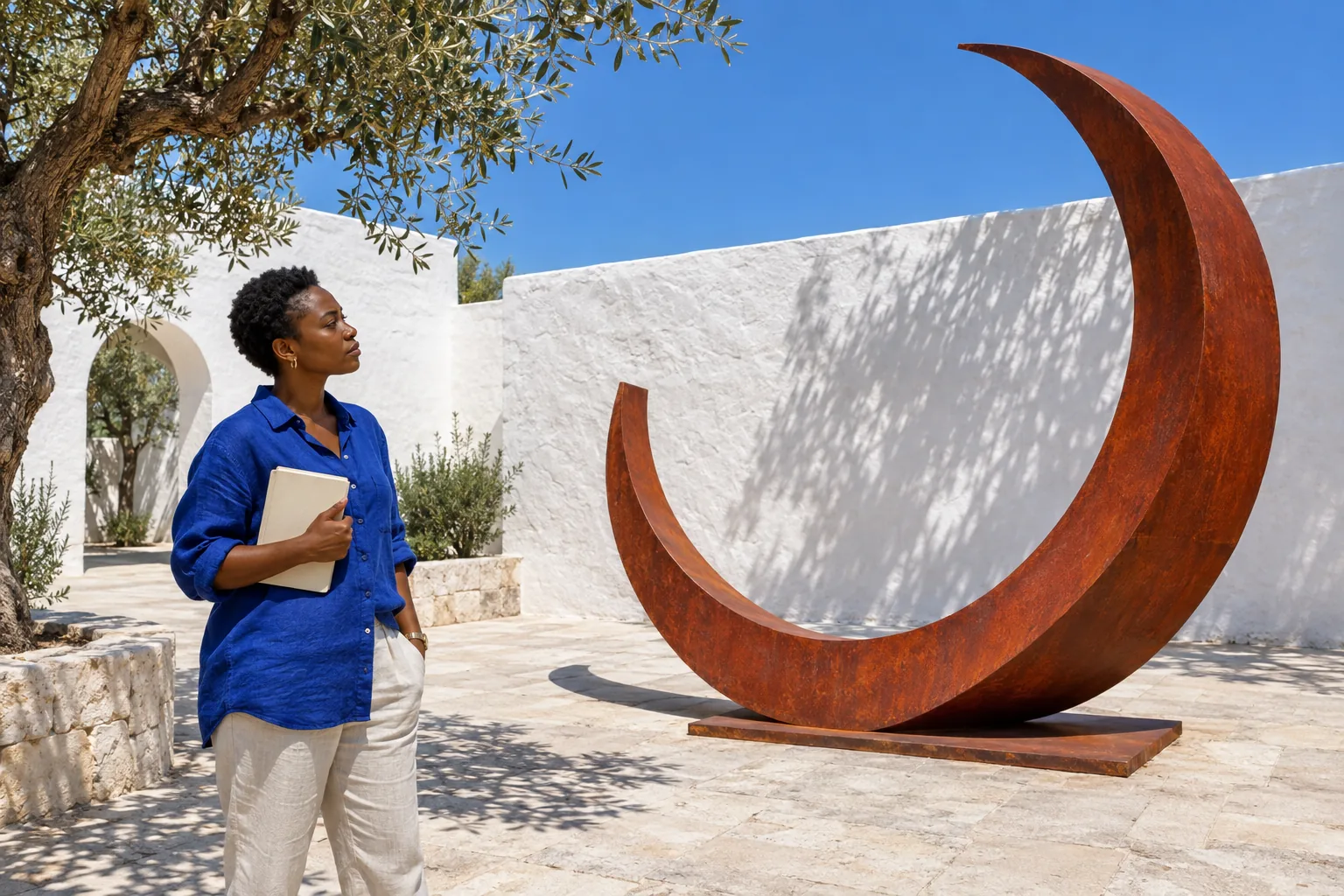
Metaphors in fiction can sharpen a moment, but an impressive image can also hide what actually happened. A character notices a curved sculpture; suddenly the paragraph contains a moon, a ship and a sleeping animal. Each comparison may sound attractive on its own. Together they ask the reader to assemble three different scenes while the character is still standing in one courtyard.
A useful revision begins with the real object and the particular quality you want to transfer. This guide follows Dara, an adult visitor pausing beside a rust red sculpture in a white courtyard. The exercise is entirely manual: establish the literal observation, choose one connection, test whose language it is, and return to the action. You need a paragraph and a few minutes of close reading.
Metaphors in fiction begin with something literal
A metaphor carries a description beyond its ordinary literal application. The Academy of American Poets distinguishes it from a simile, which explicitly marks a comparison with language such as “like.” That definition helps you name a device; it does not decide whether a particular sentence belongs in your story. Make that editorial decision by examining what the sentence contributes to this moment.
Write a plain version first: “Dara stopped beside the rust red sculpture. Its curved sides left an opening toward the courtyard gate.” This establishes a person, material, shape and orientation. There is no need to publish this exact sentence. It is a reference against which you can check a more figurative version. If the image removes the opening or moves the gate, you have changed more than style.
Now identify one useful quality. You might want the sculpture to seem incomplete, enclosing or protective. Those are different possibilities, not interchangeable ornaments. Choose the one that matters to Dara’s present attention. In this exercise she has been considering whether to leave an unfinished project alone. That context gives an open shape relevance without requiring a paragraph that explains her whole history.
Choose the connection before the beautiful noun
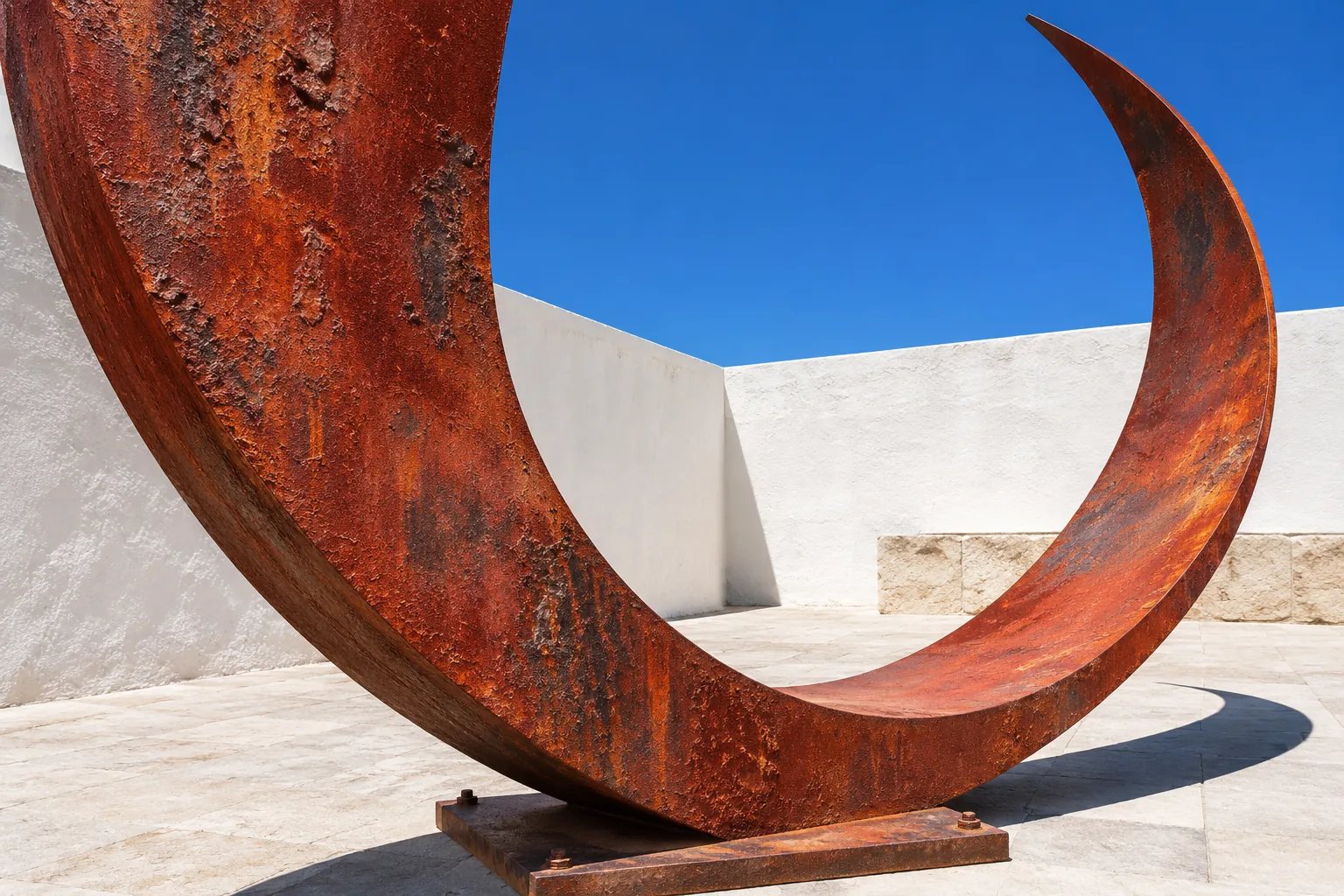
Try “The sculpture was a parenthesis left open.” The connection concerns an unfinished enclosure. It does not claim that metal is made of punctuation or that a written sentence exists in the courtyard. The literal surroundings let the reader understand the transfer. Ask what this version emphasizes that the plain observation did not, and whether that emphasis serves the scene.
Keep an alternative nearby: “The sculpture was a shelter with one wall missing.” That makes protection and exposure more prominent. It could suit a different character, but it directs this moment away from Dara’s unfinished project. Choosing between these images is therefore a choice about meaning. Do not select the second merely because it contains a more concrete noun or feels more dramatic.
Describe the relationship in ordinary words before polishing: both the curve and the imagined punctuation surround something without completing the boundary. If you cannot state a connection, investigate whether the sentence offers productive mystery or simply lacks a usable link. Readers can enjoy strangeness, but they still need enough orientation to follow the character’s attention. Precision about your intention leaves room for surprise.
Let the image belong to a particular observer
Would Dara think in punctuation? Perhaps she edits exhibition captions and has spent the morning breaking a long sentence into smaller parts. That is a possible reason for the image, not a compulsory biography for every metaphor. A single earlier detail can make the wording feel available to her. Avoid inserting a professional résumé merely to justify one decorative sentence.
A narrator may also use language that the character would never say aloud. Decide where the description comes from in your chosen narrative voice. In a close viewpoint, a sudden technical image from an unrelated field may push the reader away from the observer. In a more independent narrator’s voice, the same distance may be intentional. Judge the effect against the paragraph around it rather than applying an absolute rule.
Test ownership by substituting another observer in your notes. Would the sculpture look like an unfinished gesture to a dancer or an interrupted joint to a carpenter? These possibilities expose the choices inside description. You do not need to put all of them into the story. Keep the one that fits Dara’s current attention, the established voice and the emotional scale of this ordinary pause.

Keep the physical scene available
Read the figurative sentence with its neighbors: “Dara stopped beside the rust red sculpture. It was a parenthesis left open. Through the gap she could still see the gate.” The final sentence restores a physical view. The reader can hold the image and the courtyard together. Nothing requires the next sentence to interpret the punctuation as a symbol of Dara’s whole life.
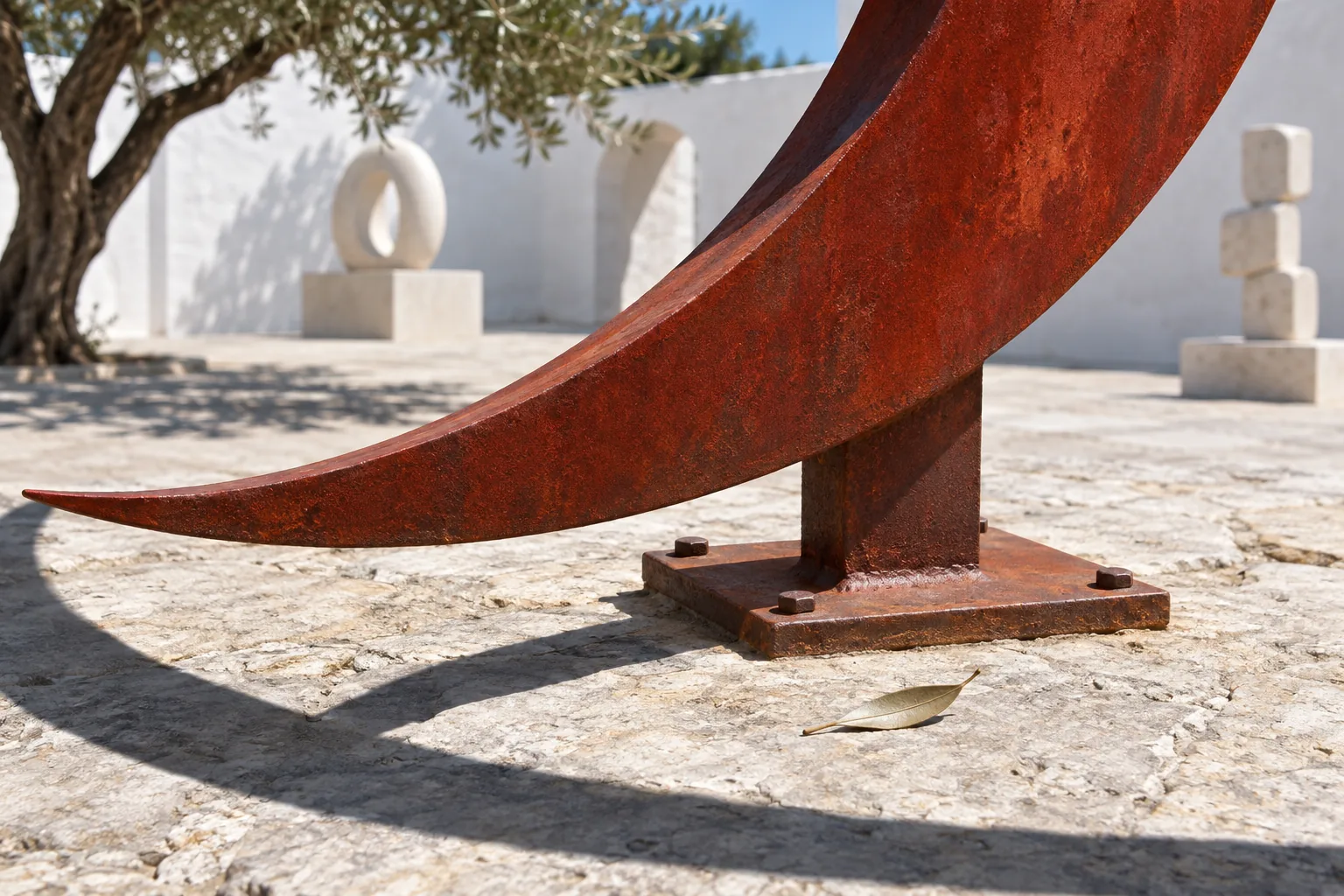
Do not force every detail into the metaphor. The sculpture’s metal foot remains a metal foot; the olive leaf near its base can remain a leaf. Calling those details a full stop and a discarded syllable might extend the idea, but it also turns the scene into an elaborate verbal construction. Use that extension only if the story benefits from such concentrated attention.
Check any action that follows. Dara might step sideways, see how the opening changes against the gate, then continue toward the exit. A description that implies a closed ring would complicate that movement. A figurative image should not accidentally contradict the space in which the character acts. If the reader cannot tell where Dara stands, repair the literal orientation before adding another image.
Revise a mixed image by following its movement
Consider a deliberately crowded draft: “The open parenthesis sheltered her, then sailed across the afternoon.” Punctuation, architecture and a vessel compete for control. This is not automatically forbidden; a wildly changing image can be a deliberate voice choice. Here, however, the ordinary scene has not earned that instability. The sentence asks for several unrelated transformations without showing why Dara’s attention shifts.
Underline the verbs as well as the nouns. Mixed images often become confusing through action: something rooted begins to sail, something sealed begins to spill. Ask which physical behavior your central comparison makes available. An open parenthesis can enclose, interrupt or remain unfinished in the logic of this passage. It does not need to perform every action associated with an actual object.
Repair the example by choosing one emphasis: “The sculpture was a parenthesis left open. Dara let the unfinished curve stand.” The second sentence could still feel too interpretive; you can cut it and keep the gate visible instead. Revision is not the search for a universally correct metaphor. It is the removal of competing instructions until the reader can follow this particular moment without unnecessary reconstruction.
Replace a familiar phrase only when it helps
A familiar image is not worthless merely because someone has used it before. In dialogue, a stock phrase may reveal habit, discomfort or a wish to avoid saying something directly. In an unobtrusive narrative passage, it may let the reader move quickly. First decide whether familiarity obstructs your purpose. Do not replace every ordinary expression with a conspicuously original one.
If “a weight lifted from her shoulders” gives Dara a generic reaction, return to the scene rather than searching for a stranger synonym. What changes in her body or behavior? She might stop gripping the notebook or let another visitor pass before heading out. These literal details may communicate the shift more effectively than a new comparison. Figurative language is one option among several.
When you do want freshness, alter the relationship, not just the exotic object. Calling relief an unusual mineral does little if the connection remains unclear. Dara’s open parenthesis is useful because its unfinished boundary relates to the question occupying her. Check the actual perception first. A specific observation can produce language that feels individual without forcing the narrator to advertise its cleverness.

Run a short deletion and substitution test
Copy the paragraph into two temporary versions. Remove the figurative sentence from the first. In the second, replace it with a literal description of the opening. Keep the action, viewpoint and surrounding facts fixed. Read each version aloud. Notice whether the metaphor changes what you understand, how long you pause, or whose sensibility seems to shape the scene.
Ask one precise question of a reader: what quality of the sculpture did the paragraph make important? An answer about the open boundary suggests that the intended connection is available. An answer about a dangerous enclosure might expose an unintended emphasis. Do not require the reader to repeat your interpretation word for word. You are testing whether the scene offers a coherent experience, not whether it produces an identical private image.
Choose a version and read beyond it. A sentence may sound excellent in isolation but slow the next action or repeat an emphasis already established. Check the whole page for nearby figurative images, too. One strong connection needs space to register. This is a local revision decision, so keep a brief note of what you changed rather than turning one successful edit into a rule for the entire manuscript.
Return from the image to the next action
End the exercise with a complete small passage: “Dara stopped beside the rust red sculpture. It was a parenthesis left open. Through the gap she could still see the gate. She loosened her grip on the notebook and walked toward it.” The destination of “it” could be made explicit as “the gate” if the surrounding paragraph leaves competing references. Figurative revision never excuses ordinary clarity.
The image now has a limited job: it makes an unfinished boundary available to Dara’s attention. The next movement belongs to the literal courtyard again. You can develop the project question elsewhere, or let this remain a passing observation. Avoid adding a final explanation that tells the reader exactly what the sculpture proves about her future. The moment can suggest without settling everything.
For your own page, finish with three decisions: the physical fact that stays, the quality that the comparison transfers, and the action that follows. If one remains uncertain, revise that part before polishing vocabulary. You can keep an unusual image, choose a plain sentence or remove the description entirely. The useful outcome is a passage whose language and movement support the same scene. If you already use Fyrlo, you can keep the accepted scene context with its chapter plan and request one literal alternative for comparison. The manual test above remains sufficient. Review any suggestion yourself: generated wording can change facts or introduce an unsuitable image, and some usage may require in-app purchases.
Good to know
Questions and answers
Does every descriptive paragraph need a metaphor?
No. A literal detail can provide all the orientation and emphasis a paragraph needs. Use a metaphor when its particular connection adds something useful to the reader’s experience of the scene, and let nearby sentences remain plain.
Is a mixed metaphor always a mistake?
No. Deliberate shifts can belong to an unstable, comic or exuberant voice. Check whether the changes are intelligible and purposeful in context. In an otherwise restrained passage, an accidental shift may demand attention the scene cannot support.
How can I revise without flattening my voice?
Keep the underlying observation and test one sentence at a time. Compare a figurative version with a plain one while holding the facts fixed. Choose the version whose emphasis and pace fit the surrounding narration, rather than removing every unusual image.