
Fiction craft
Connect subplots through consequences
Give a side story its own wish, let choices change both threads, and resolve the smaller promise without taking over the main ending.
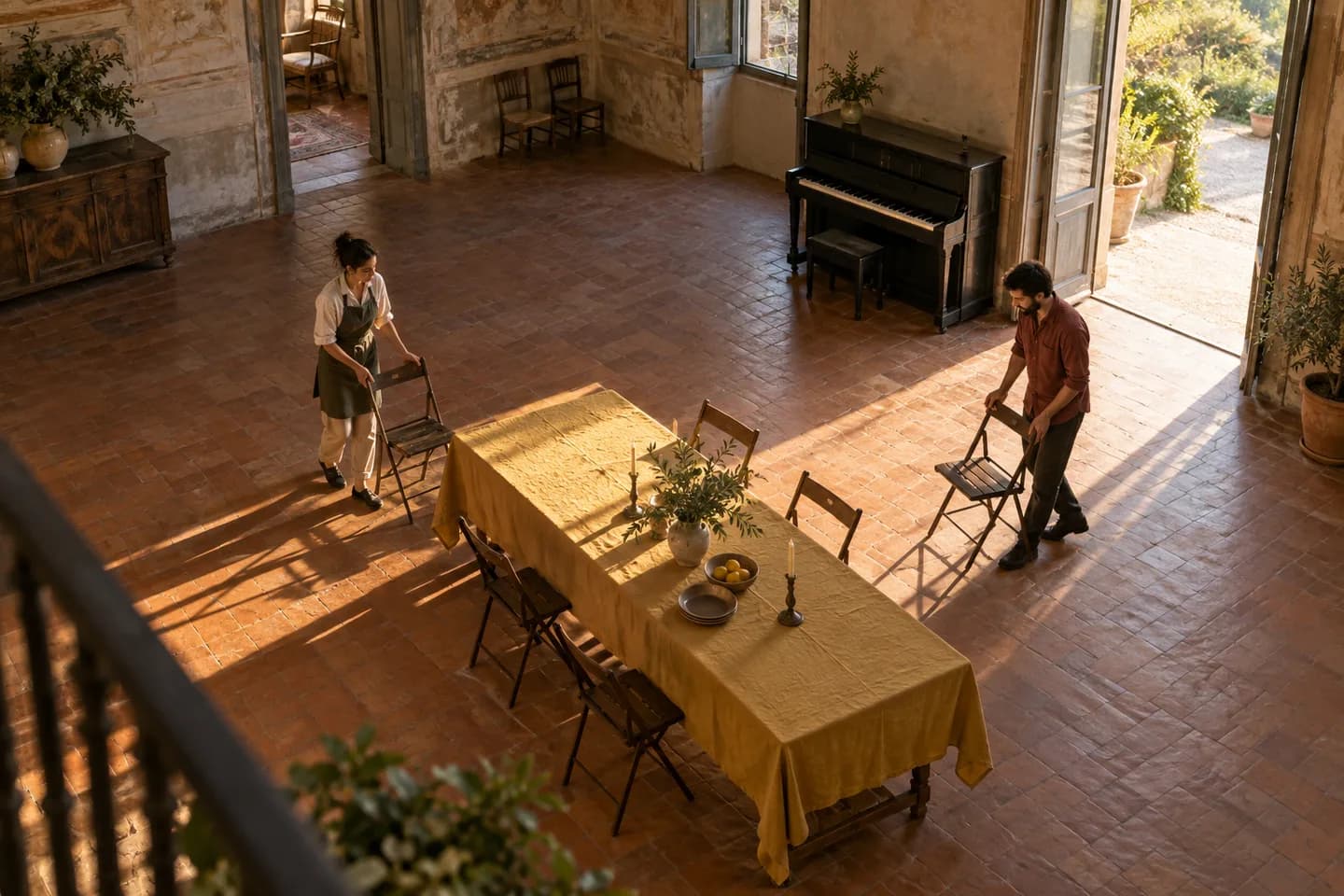
Subplots can be engaging on their own and still feel detached from a novel. A conversation, rehearsal or private ambition may be enjoyable, yet the main character returns to exactly the same problem afterward. To connect the stories, look for a decision that changes what someone can do next. That consequence gives the side story a place in the reader's understanding of the whole.
This guide develops an invented example. Mira wants to hold a community supper in a disused dance hall. Her friend Jon wants to record its old piano before the owner removes it. Both are adults with separate hopes. Their stories share a room, but sharing a location is only the beginning. You can work through every exercise with a notebook and a draft; no writing app is required.
Give subplots a change of their own
A subplot is a secondary sequence of events with something at stake and a change over time. Jon liking old instruments is characterization. Jon seeking permission to record a particular piano, losing access and changing his approach gives that interest a story. The distinction helps you decide whether you need several scenes or just a revealing detail.
Write one sentence naming the secondary person's goal and the obstacle specific to it. Jon wants a recording he can share, but the owner values the piano as a private memory. Mira needs guests to feel welcome, whereas Jon needs a quiet room and a willing participant. Separate needs make their exchanges more useful than a side character who exists only to encourage the protagonist.
Then write a possible ending for the smaller story. Jon might accept a recording that stays private, abandon the project or find a different sound worth preserving. Leave the outcome provisional, but identify what must change between the first attempt and the last. A new attitude without a decision on the page can remain too vague to carry several returns.

Name the main promise before adding crossings
What question makes readers continue with Mira? Perhaps they want to know whether she can bring estranged neighbors together at the supper. The promise concerns a gathering and the trust needed to hold it. A successful recording would not automatically answer that question. Keeping the promises separate makes it easier to see where a connection is doing real work.
Summarize the main situation using a goal, a pressure and a consequence of failure. Avoid writing the entire outline here. You need a reference against which to judge a side scene. If you cannot yet explain Mira's central problem, adding another thread may temporarily conceal the uncertainty while making the draft harder to revise.
Give each thread a small set of verbs. Mira invites, negotiates and arranges. Jon asks, listens and records. Different actions keep the stories distinct even when the same people appear. For more help separating motives from circumstances, the independent guide to conflict in a story examines why believable goals can put reasonable people in opposition.
Make the first meeting change a practical condition
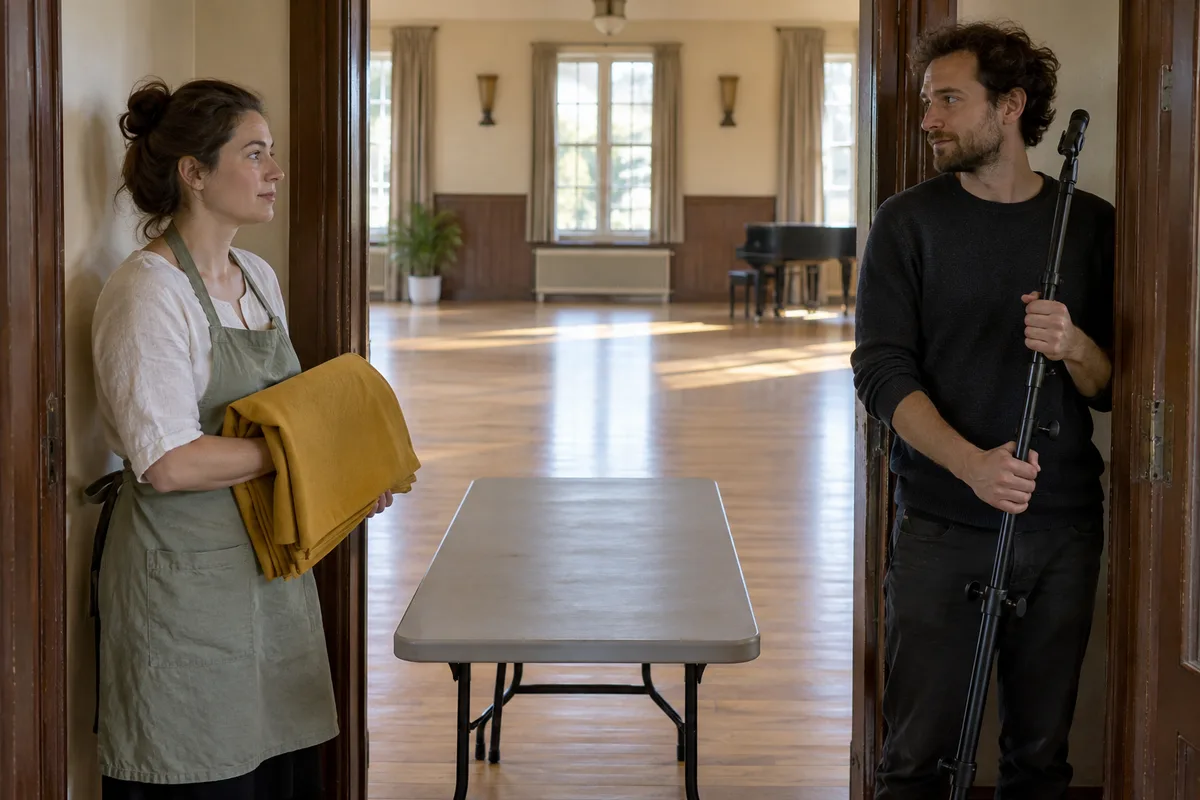
A crossing becomes concrete when one action changes the conditions of another. Jon reserves the hall's quiet hour for a recording attempt. Mira has already promised that hour to volunteers arranging the supper. She now has to revise a commitment, persuade Jon or find another preparation space. The subplot has introduced a decision rather than an extra conversation.
Publisher Atmosphere Press describes weaving as interaction between storylines, not merely alternating their appearances. Our hall exercise develops that distinction with its own invented circumstances. Choose a shared resource, person, fact or promise, then state the consequence in ordinary language. Because Jon needs silence, Mira loses preparation time. That sentence exposes the connection clearly enough to revise it.
Give the meeting an immediate result and a later cost. Mira agrees to work outside the room for an hour, which leaves her with an awkward setup and a promise to explain. You do not need a catastrophe. A small concession matters when it changes a relationship or forces another choice. Keep the scale appropriate to the novel you are writing.
Let pressure travel back into the side story
If Jon repeatedly makes Mira's task harder while her choices never affect him, he can start to resemble a movable obstacle. Try one consequence traveling in the other direction. Mira invites the owner to the supper without asking whether the piano will be part of the entertainment. Jon now has to clarify the recording request in a conversation he hoped to postpone.
That clarification reveals the owner wants the instrument's memory to stay personal. Jon cannot keep pursuing his original public project unchanged. The main event has put his assumption under pressure; his response will influence how Mira uses the room. The two stories remain distinguishable, but their decisions now depend on each other.
Check that everyone retains agency. The owner can decline. Jon can respect the answer or press his case. Mira can remove the piano from the evening's plans, even if that disappoints guests. Do not turn a secondary person into a convenient source of permission, money or information at the exact moment the protagonist needs it. Establish the relevant wish before the request arrives.

Return when the situation has moved
A subplot does not need to appear every other chapter. Return when a new condition makes its next decision meaningful. After the invitation, Jon must speak to the owner. After that conversation, Mira must revise the evening. The reader has a reason to revisit each thread because the last appearance left a consequence that is now ready to matter.
In your notebook, record the last action, the unresolved question and the next event that changes it. If several chapters pass, bring back a concrete reminder through action: Jon folds the microphone stand instead of testing the piano. That gesture reminds us of the recording problem while showing its current state. A lengthy recap would delay the scene you came to tell.
Keep the return's entry point close to a choice. A paragraph describing all Jon's feelings may be less useful than his request to keep the room empty for ten minutes. If the movement between threads still feels abrupt, the guide to scene transitions offers ways to orient readers in time, place and viewpoint without explaining the entire missing interval.
Make room for resonance without forcing utility
Not every valuable side scene has to supply a key or solve a practical problem. Jon's respect for a private memory can change how readers understand Mira's wish to create a public celebration. The contrast has emotional value even if no object changes hands. The useful question is what the scene adds to the experience of the central story.
To test that value, describe a before and an after in the reader's understanding. Before the conversation, the hall seems like an available space. Afterward, it feels like a place carrying somebody else's attachments. Mira's arrangements now mean something different. That shift can justify a quiet scene without pretending it is a dramatic plot reversal.
Avoid spelling out the theme in identical speeches. Let one person insist that an experience should be shared and another protect its privacy. Their actions can hold that tension. A side story becomes richer when it offers a different response to a related question, rather than repeating the protagonist's lesson with a new name.
Match the resolution to the promise you made
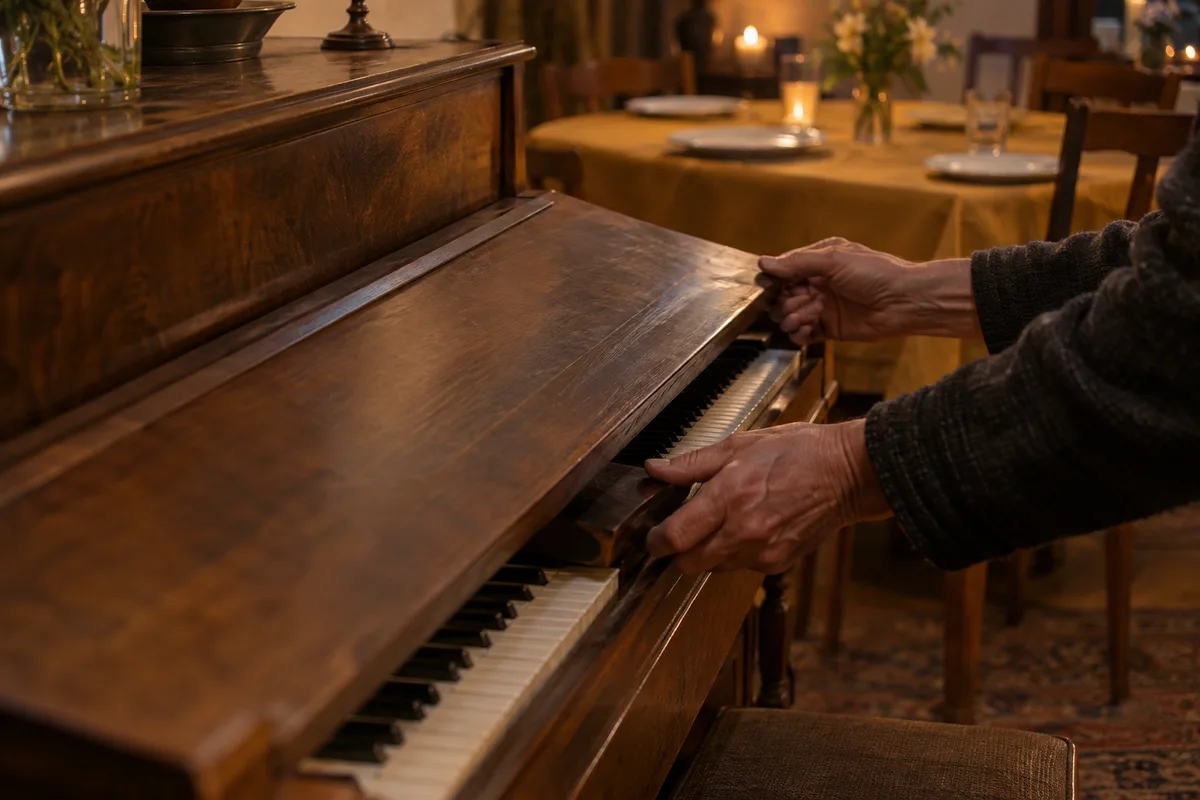
Jon does not have to perform a triumphant recording during the supper. If the smaller story promised a decision about sharing someone's memory, accepting a private recording or putting away the equipment may fulfill it. Show the action that settles the request. A closed piano cover can carry meaning if the reader knows what opening it would have meant.
Mira still needs to address her own promise. Moving the tables and telling guests there will be no piano performance may make the supper less impressive, but more attentive to the people who lent the space. Jon's choice changes her options; it does not excuse her from making the central decision. Preserve that responsibility through the main ending.
Resolve the threads at timings that suit their relative importance. Some smaller questions can close before the final gathering, leaving their consequences active. Others need a brief acknowledgment afterward. Do not give every subplot an equally long farewell by default. The amount of space should reflect the expectation you built, not the number of characters waiting for a closing paragraph.
Revise the connection with a temporary removal
Read the main sequence while temporarily skipping Jon's scenes. What becomes less understandable? Mira's changed preparation plan, her decision to leave the piano quiet and her conversation with the owner should have reasons. If those reasons survive unchanged elsewhere, the subplot may be duplicating work. You can shorten it, merge a scene or let its distinctive emotional role become clearer.
Now read Jon's scenes together. Can you follow his goal, attempt, resistance and decision without inventing missing steps? This is a diagnostic reading, not a demand that the subplot become a standalone novel. It reveals whether your returns actually advance the smaller story or merely remind readers that the sound artist is still around.
Finally restore the full order and ask someone to describe what changed at each crossing. Ask where they stopped caring, rather than whether they liked the subplot in general. If they remember the recording but cannot connect it to Mira's choices, inspect the consequence after each encounter. The repair may be one changed action in an existing scene, not several additional chapters.
Draft one crossing before expanding the whole thread
Choose the moment when Jon and Mira both need the same hour in the hall. Draft their requests, the concession and its immediate result. End with a changed condition: Mira takes the tables elsewhere, or Jon gives up the slot and loses his planned participant. Read that short sequence before inventing more subplot scenes. You are testing a usable connection, not accumulating background.
Then write the next decision caused by that result. Follow only far enough to see whether the relationship changes and both people still have their own wishes. This small sequence gives you evidence from the draft. If it feels lifeless, try a different shared commitment before discarding either person. The goal is a meaningful interaction that earns the reader's attention.
If you later use Fyrlo to hold accepted character and plot context together, the plot and characters workflow can support your reference notes. Keep speculative outcomes separate and review any generated continuation yourself. It does not guarantee coherence, originality, accuracy or publication readiness, and it cannot decide whether Jon's story deserves space in your novel. The consequence on the page remains the standard you judge.
Good to know
Questions and answers
How many subplots should a novel have?
Use the number you can develop and resolve meaningfully. Start with one that changes a choice or deepens the central experience. A short work may need none. There is no universal count that makes a story complete.
Must every subplot solve the main problem?
No. It can complicate choices or change the reader’s understanding. Give it a recognizable development and show what its scenes contribute. Avoid inventing a convenient rescue solely to justify keeping the thread.
Can a subplot finish before the climax?
Yes. Its question can be settled earlier while the consequence remains active in the main ending. Give it enough closure for the expectation you created, without assigning every thread an equally long farewell.