
Movement and orientation
Scene blocking without a floor-plan paragraph
Make a departure easy to follow. Establish a bench, a doorway and two bags, then clarify the handoff without narrating every step across the room.
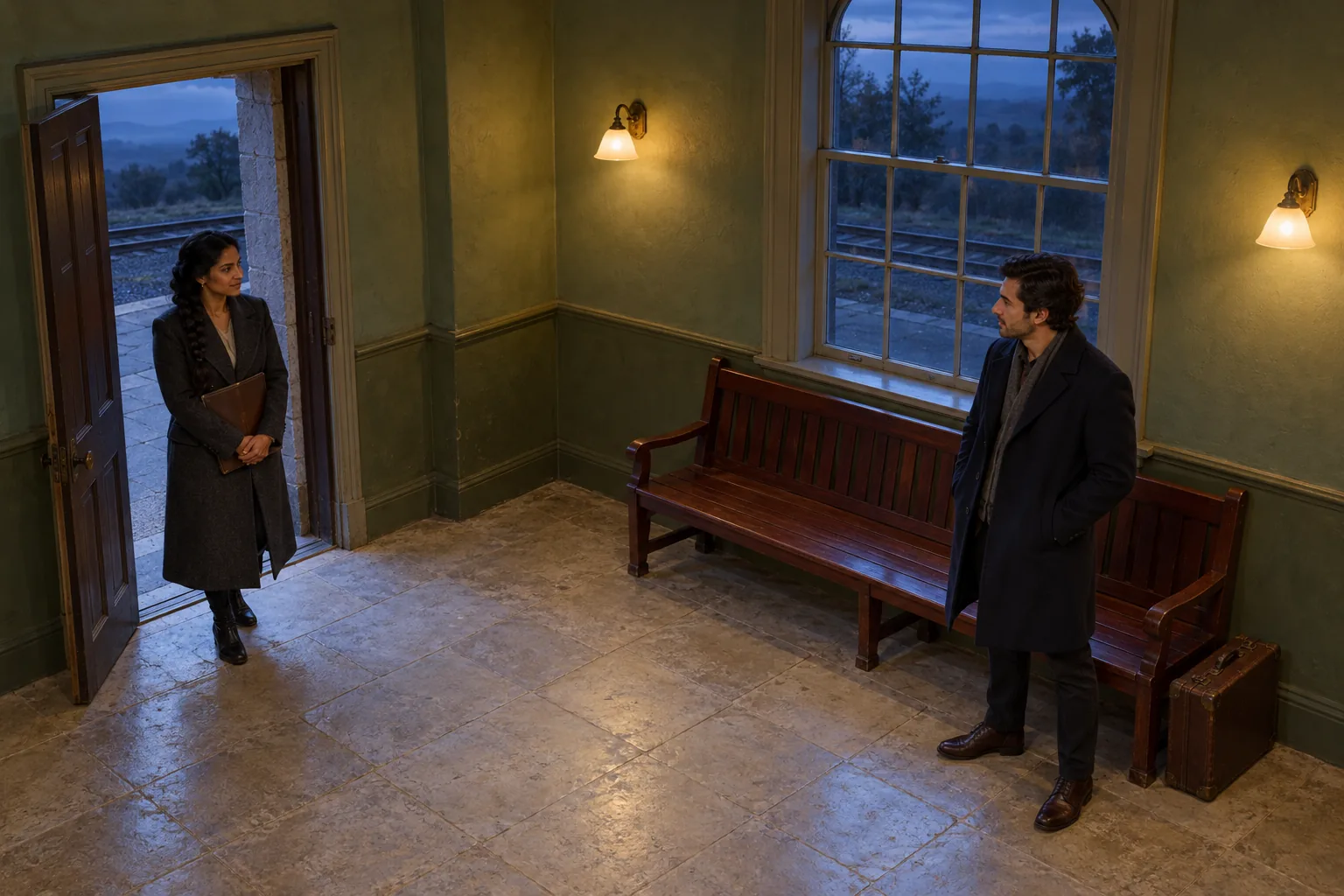
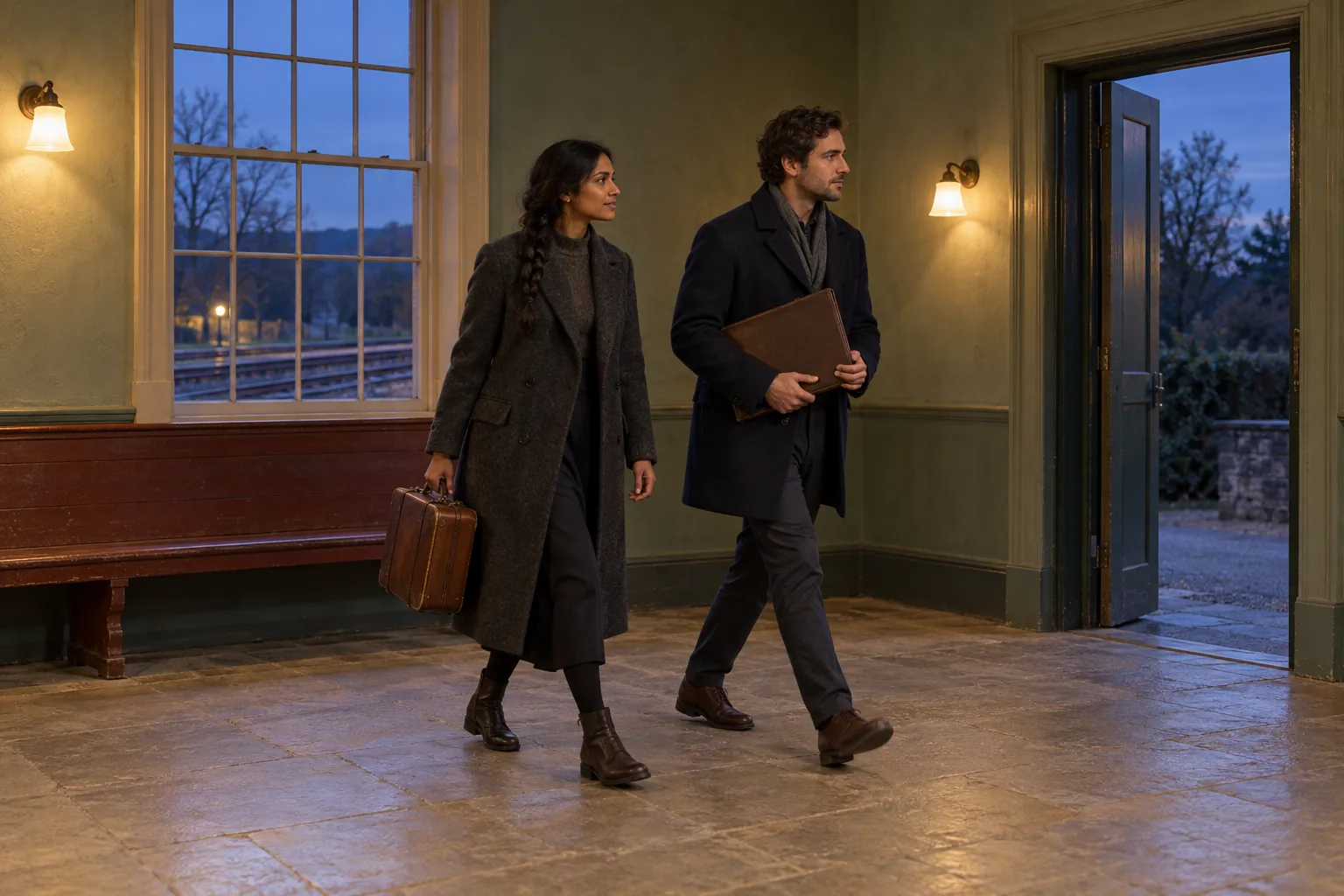
Iris enters a waiting room carrying a flat portfolio in both hands. A suitcase stands beside the bench, and Pavel is near the open doorway. Three sentences later, he is holding the portfolio and she is walking out with the suitcase, yet nobody seems to have crossed the room or put anything down. Scene blocking helps you make that change readable. You establish the positions and actions a reader needs to follow, while leaving ordinary, easily inferred movement between them.
This independent guide uses an original scene with two adults, one bench and two pieces of luggage. You will identify stable landmarks, check an object’s resting place and ownership, and turn your working notes into a short passage. The method works with a manuscript and a scrap of paper. The aim is a coherent departure that still feels like a lived moment, without turning every step into an instruction for an actor.
Scene blocking begins with what changes
Decide what the small scene accomplishes. Iris and Pavel are leaving together. At the start, she carries the closed portfolio, he waits near the door, and the suitcase stands on the floor beside the bench. By the end, Pavel carries the portfolio and Iris carries the suitcase. That transfer of work gives the movement a purpose.
Write the beginning and ending states on your own working page. Then ask what must happen between them. Iris needs a place to rest the portfolio while the carrying arrangement changes. Pavel must come within reach before he can take it from the bench. The suitcase needs to remain available for Iris to lift. Those facts constrain a plausible sequence without requiring exact measurements, a detailed floor plan or a new plot complication.
Patricia C. Wrede’s discussion of scene choreography notes that the amount of planning a writer needs varies. Take that as permission to use a small working check rather than a compulsory preparation system. Our luggage example and the revision sequence here are original.
Give the room a few stable landmarks
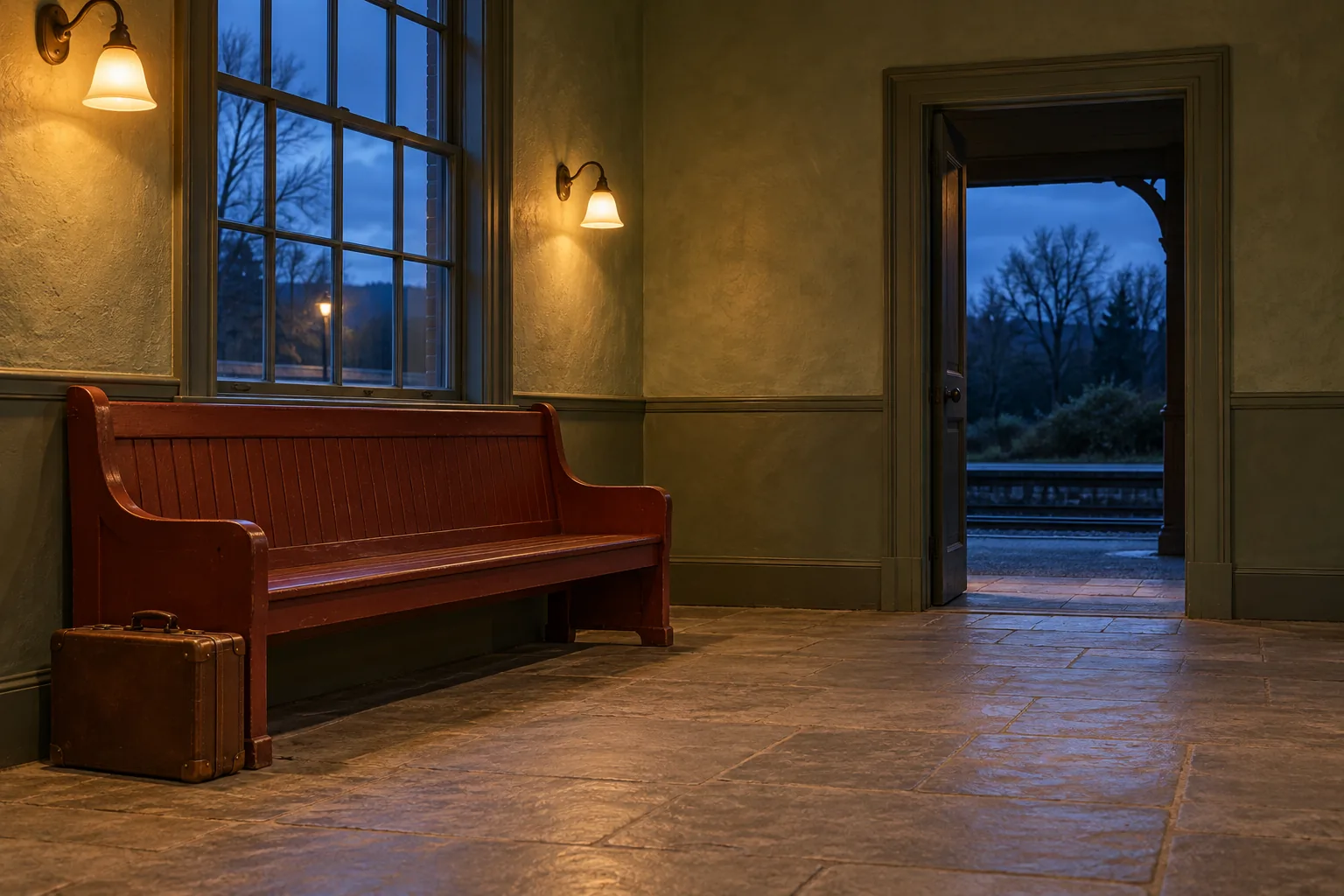
For this scene, the bench sits beneath the window and the doorway opens on the opposite side of the room. There is clear floor between them. The suitcase stands beside the end of the bench. These relations establish the route that matters.
Choose the landmarks before relying on relative words such as there, behind or across. He went over there can work once a destination is clear; it is less useful when readers have not yet learned that a bench exists. Introduce an important surface before using it as the place where an object has apparently been resting all along. A short reference to the bench under the window can carry both orientation and visual detail.
Keep the layout stable in your notes as the viewpoint moves. A door does not change walls because Iris turns around. If you revise the opening and move the bench elsewhere, check later references that depended on its old position. Readers do not need an inventory of the whole waiting room, only enough consistent relationships to follow the actions you have chosen to put on the page.
Follow the object through a visible handoff
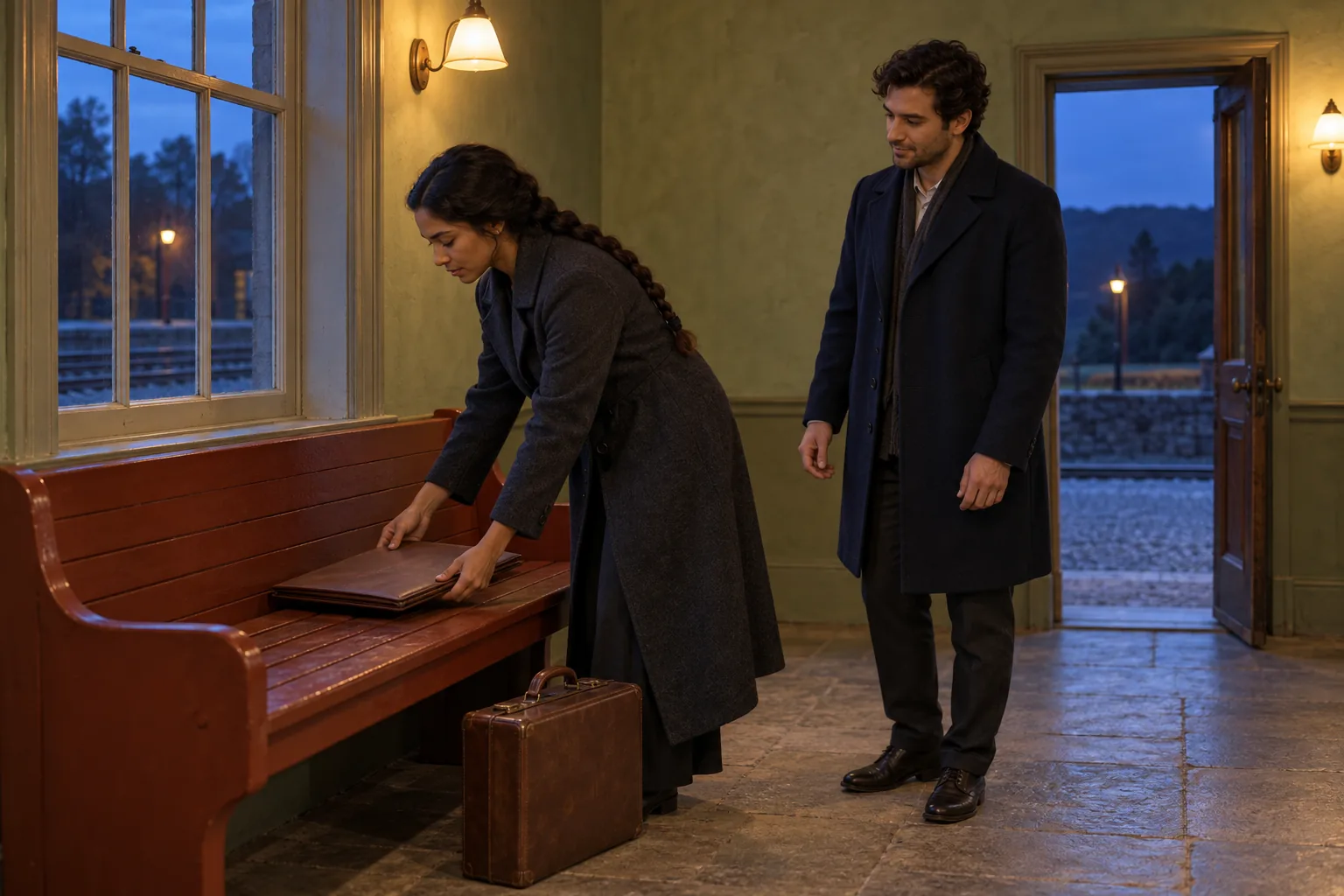
Trace the portfolio separately from the people. At first Iris holds it. She lays it on the bench. Pavel approaches and picks it up. He carries it toward the doorway. This short chain prevents the object from jumping between hands. You may compress parts of the chain in finished prose, but you should be able to recover its resting place and carrier at every point where the reader needs that information.
An initial draft might say: Iris set the portfolio on the bench beneath the window. Pavel came over from the doorway and took it. Now she could lift the suitcase beside the bench. The wording establishes a surface, an approach and a change in who carries what. It does not need to describe every finger. If Pavel takes it directly from her hands instead, write that different transfer clearly and check what follows.
Track relevant constraints rather than inventing unnecessary ones. Iris uses both hands to keep the broad portfolio steady; setting it down gives her freedom to collect the other bag. That is a fact of this example, not a rule about how all portfolios must be carried. Do not add a locked case, a fragile painting or a sudden injury merely to justify a movement that the existing situation already makes understandable.
Check reach, route and available hands
Put yourself at each person’s current position for one pass through the draft. Can Pavel reach the portfolio from the doorway? If the bench is across the room, an approach must be stated or clearly implied before he picks it up. Can Iris lift the suitcase while still holding the portfolio with both hands? The handoff resolves that question.
Also consider the route. In our example, the floor between the bench and the open doorway is clear. A suitcase placed across the doorway would create a different situation. If a draft includes an obstacle, decide whether someone moves it, steps around it or changes destination. Readers can usually supply an ordinary step. They cannot reliably supply the removal of an obstacle the story has explicitly told them is blocking the way.
Keep the door’s state consistent. Here it is already open and does not need to be held by Pavel while he crosses the room. If you choose a door that swings shut, the action needs a corresponding solution. That solution can be brief, but it becomes part of the accepted scene. Test only the details your passage makes relevant; an ordinary departure does not require a technical account of door hardware.
Orient through the person noticing the room
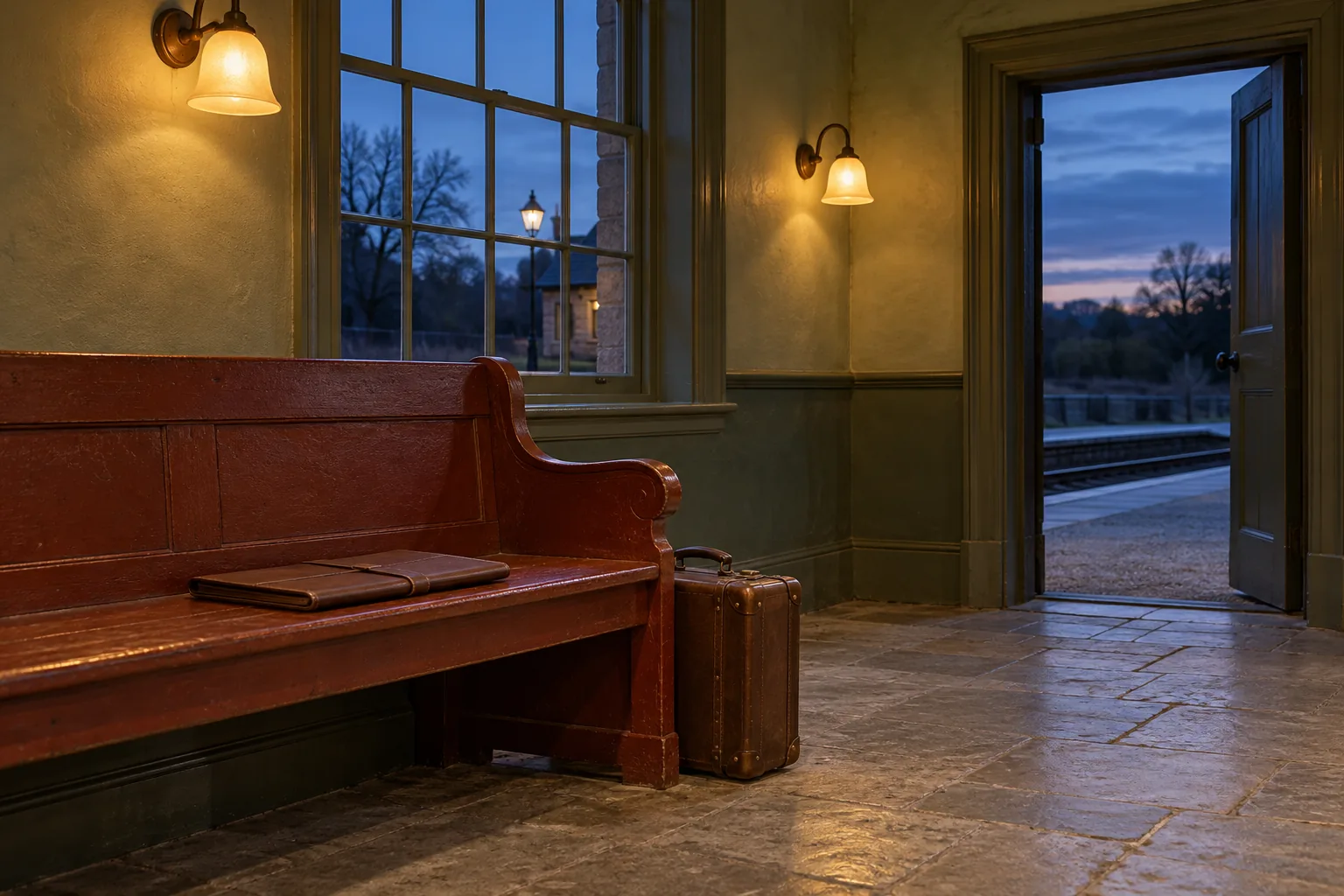
In a passage close to Iris, the bench is useful because she needs somewhere to rest the portfolio. The case matters because she must collect it. Let those immediate purposes guide the order of attention. You can introduce the clear route when she turns toward the exit, rather than stopping at the entrance to describe every wall. The setting becomes available through the task she is performing, in the order she needs it.
Be careful with left and right when their reference is unclear. A suitcase to the left might mean Iris’s left, Pavel’s left or the reader’s imagined view from the door. Beside the bench end is often enough for this particular action. If a precise side matters, establish whose orientation you are using.
Orientation also includes what can be seen. Iris cannot describe an object behind a solid wall as though she is looking straight at it. She may know it is there from earlier events, but knowledge and current sight are different. Choose sensory details that fit her position and attention. You can then keep the physical scene tangible without silently moving the viewpoint to wherever a convenient description happens to be available.
Turn your working route into a paragraph
Your private notes may list several tiny steps. The finished paragraph can group an uninterrupted action when the relationship remains clear: Pavel took the portfolio from the bench and carried it to the open doorway. Readers can infer ordinary walking between those locations. Keep the detail that changes access, possession or the reader’s understanding.
Here is a possible short passage: Iris laid the portfolio on the bench under the window. “Could you take that?” Pavel crossed the room and lifted it. She picked up the suitcase beside the bench, then followed him to the open doorway. The transfer and the movement are explicit enough to connect. The spoken request supports the cooperation without adding an explanation of their whole relationship or a precise count of the steps between them.
Read the passage for repeated names and unnecessary direction changes. You can vary syntax once the actions are coherent, but avoid replacing every name with he or she when ownership becomes uncertain. Paragraph breaks can mark a response or a change in focus; they do not repair an omitted transfer on their own. First make the sequence understandable, then decide where its rhythm benefits from continuity and where it needs a pause.
Remove movements that do no useful work
Underline every physical action in a short section of your manuscript. Ask whether it establishes a necessary position, changes who holds something, reveals a meaningful response or enables what happens next. A gesture may do more than one job. Iris pausing with the portfolio halfway to the bench might matter if she is unsure about leaving. If the hesitation changes nothing and carries no intended effect, you can consider cutting it.
Avoid making the room busy merely to keep the characters visible. Repeatedly sitting, standing, turning and crossing back to the same place can distract from a simple exchange. Sometimes one stable position lets the dialogue or thought carry the moment. Preserve stillness when it serves the scene. The goal is not constant motion, but a reader’s ability to follow whatever motion you do choose to include, including a deliberate refusal to move.
After cutting, inspect the remaining links. Removing Pavel’s approach may accidentally leave him picking up a distant object. Removing Iris’s act of putting the portfolio down may leave her carrying both pieces of luggage in a way you did not intend. A deletion can improve pace and still break the physical sequence. Restore the smallest useful connection, then reread the paragraph at normal speed rather than explaining every repair to the reader.
Test the scene without your private sketch
Give a reader the passage alone and ask three practical questions: where were the people at the start, who carried each object at the end, and what movement enabled the change? You do not need matching drawings of every corner. Look for agreement about the relationships that matter. If the answers differ from your intention, revise the relevant sentence rather than adding a whole floor-plan paragraph to solve one missing destination.
If you already use Fyrlo, you can optionally request one bounded alternative after completing the manual check. Keep the accepted positions, object locations and outcome beside the draft, then inspect the new wording yourself. It may move a door, change a carrier or invent an obstacle. A fluent rewrite is not evidence of spatial continuity. The exercise above works independently; you can keep your own paragraph without asking an app to approve it.
AI Story Draft is published by Fyrlo’s developer. Fyrlo is free to download, and functions or usage may require in-app purchases. It cannot guarantee quality, originality, accuracy or publication readiness. Finish by reading the accepted passage with its next paragraph. Iris should still have the suitcase, Pavel should still have the portfolio, and any later change needs to be established. Clear movement leaves room for the story’s attention to return to the people.
Good to know
Questions and answers
Does scene blocking require a floor plan?
No. A few notes about positions, destinations and important objects may be sufficient. Draw a sketch only when it helps you resolve a particular uncertainty; readers need the useful relationships, not all your preparation.
Must every step appear in the prose?
No. Readers can infer ordinary movement when the route and destination are clear. State changes in access, possession or position when leaving them out would make the next action confusing or impossible within the established scene.
Is this the same as choosing a setting?
The tasks overlap, but this guide checks a local physical sequence inside an established place. Choosing the wider environment, atmosphere or constraints of the story is a broader decision than tracking one departure and its luggage.